
Racking explained: how panels follow a grade
Fence racking lets a fence follow a slope with plumb pickets and tilted rails; here is which materials rack, where it stops working and how we build it.
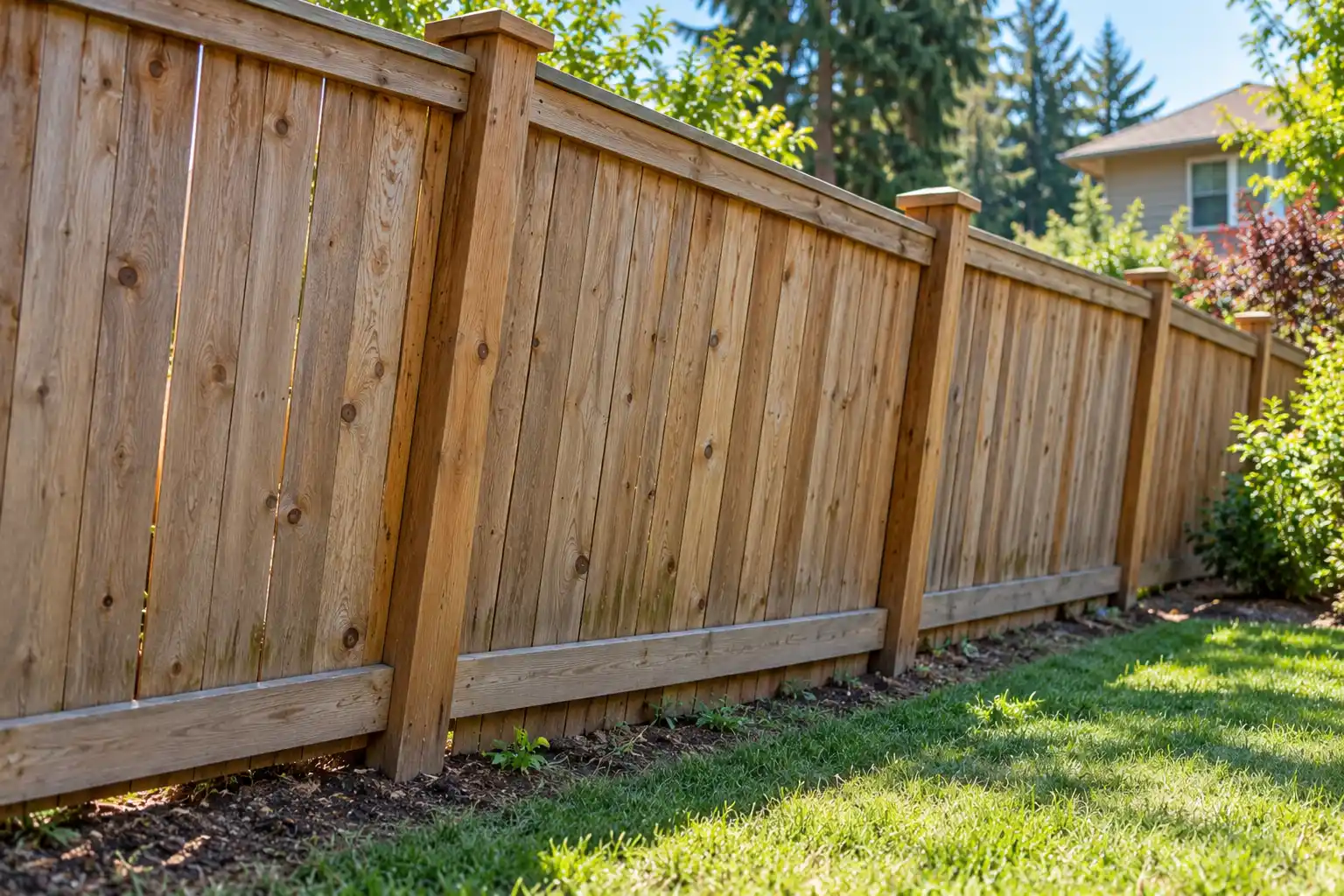
Racking is the method of building a fence so the rails tilt with the ground while every picket stays plumb. The result is a continuous top line that follows the slope with no steps and no triangular gaps at the bottom. It works on most wood fences and on panels designed to pivot, but not on rigid factory panels.
| Material | Can it rack | Grade it tolerates | What happens past the limit |
|---|---|---|---|
| Cedar built on site | Yes | Most residential slopes, including Seattle hillside lots | Rails get too short between posts and pickets crowd; we switch to stepping |
| Horizontal cedar | No | Only level runs, see our horizontal fence page | Boards must step; a tilted board reads as a mistake |
| Vinyl rackable panels | Yes, within the maker's limit | Gentle to moderate slopes | Rails bind in the post, panels must be stepped instead |
| Vinyl standard panels | No | Level ground only | Panels step, leaving wedge gaps to fill |
| Ornamental aluminum or iron | Yes, if sold as rackable | Moderate slopes | Pickets bind against the rail punching; stepped sections take over |
| Chain link | Yes | Nearly any slope | Fabric sags on very steep runs and needs more tension bands |
Racking defined: the rails tilt, the pickets stay plumb
Racking is what happens when you let the horizontal members of a fence slope while the vertical members stay vertical. Picture a parallelogram instead of a rectangle: the rails run parallel to the ground and every picket hangs straight down from them.
The alternative is stepping. A stepped fence keeps each panel level and drops the next panel down a notch, like a staircase. Stepping leaves a wedge-shaped gap under the high end of every panel and a sawtooth top line.
On a racked fence the kickboard follows the ground as well, so the bottom edge stays close to the soil along the whole run. We covered why that board matters in our post on what a kickboard does for a cedar fence. On a slope it earns its keep twice: it closes the bottom and it gives the lowest pickets something to rest on.
Which fence types rack and which must be built in place
Any fence assembled picket by picket on site can rack, because the installer decides the angle of every rail. Any fence that arrives as a rigid rectangle cannot, unless the maker engineered it to pivot. The materials we install fall on both sides of that line.
Cedar is the easy case. Rails are cut to length on the job, so they can be cut to any angle the ground demands. Pickets are nailed or screwed one at a time and plumbed with a level. The fence takes whatever shape the slope gives it.
Vinyl splits into two families. Rackable vinyl has oversized rail pockets in the posts and loose-fitting pickets, so the whole panel can lean into a parallelogram. Standard vinyl locks the pickets into routed rails and will not move; forcing it cracks the rail. Our vinyl fence page explains how we choose between the two.
Ornamental metal behaves like vinyl. Rackable aluminum and iron panels have pickets that rotate inside the rail punchings. Welded panels are rigid and must step. Chain link racks naturally because the fabric is a flexible mesh, and only the top rail and line posts need to follow the grade.
Horizontal fences are the exception
A horizontal fence cannot rack by definition. Its boards are the horizontal members, and a tilted board looks wrong from across the street. Every horizontal run on a slope is stepped, post to post, with the step hidden at the post.
Where racking stops working on steep Seattle hills
Racking fails when the slope is so steep that the rails between two posts become shorter than the pickets need. As the angle increases, the pickets at the downhill end of each bay run out of rail to attach to, and the top line starts to look wavy instead of straight.
Seattle's hillside neighborhoods push this limit often. A side yard dropping toward an alley, a backyard falling to a ravine, or a lot built on a cut-and-fill pad can all exceed what a racked cedar fence can follow cleanly. The tell is a picket that has to be trimmed into a trapezoid to meet the rail.
Past that point we step. On very steep runs we combine the two: short stepped sections where the ground drops fast, racked panels where it eases. The transitions land at posts so the eye reads a planned change rather than a repair.
How we build a racked cedar fence
A racked fence is built in a fixed order because each step depends on the one before it.
1. Set every post plumb along the line, regardless of grade, and let the post tops run long.
2. Pull a string line along the top of the run so the finished height follows the ground at a constant offset.
3. Cut each rail to the angle between its two posts and fasten it parallel to the string line.
4. Hang the pickets one at a time, plumbing each with a level, with their tops meeting the string line.
5. Fit the kickboard last so it follows the ground and closes the bottom edge.
6. Trim the post tops to the finished line and cap them.
The grade test we run before promising a racked fence
Our rule is simple: if the top string line can follow the ground without any picket needing an angled cut, the fence racks. If the ground drops faster than that between any two posts, that bay steps and the rest of the run racks. We walk the line with a string before we commit to either.
Tell us where your yard slopes and we will measure it when we plan your fence installation.
FAQ
Can a vinyl fence be racked?
Only if the panels were made for it. Rackable vinyl has deep rail pockets and loose picket channels so the panel can lean into a parallelogram. Standard vinyl panels are rigid and will crack if forced. We confirm which type a yard needs before ordering, since the two are not interchangeable.
Does racking leave gaps at the bottom?
No, and that is its main advantage over stepping. Because the rails and the kickboard follow the ground, the bottom edge stays close to the soil along the entire run. Stepped panels leave a wedge under the high end of each section that has to be filled or fenced separately.
Is a racked fence weaker than a stepped one?
Not when it is built on site. A racked cedar fence has the same posts, rails and fasteners as a level one, just cut at an angle. Rackable vinyl panels can feel looser because the pickets are made to move, which is why we treat them differently from standard panels.
Can a gate be racked?
A gate must stay rectangular to swing, so the gate itself is built level. What racks is the fence on either side. We set the gate on the flattest spot in the run, or raise the latch side so the leaf clears the ground on the uphill side as it opens.
Does racking change the fence height rule?
No. Cities measure fence height from the ground directly below the fence, so a racked fence that follows the grade keeps a constant measured height. Stepped fences can exceed the limit at the high end of each step. Check the height rules for your city before building.
More From the Blog
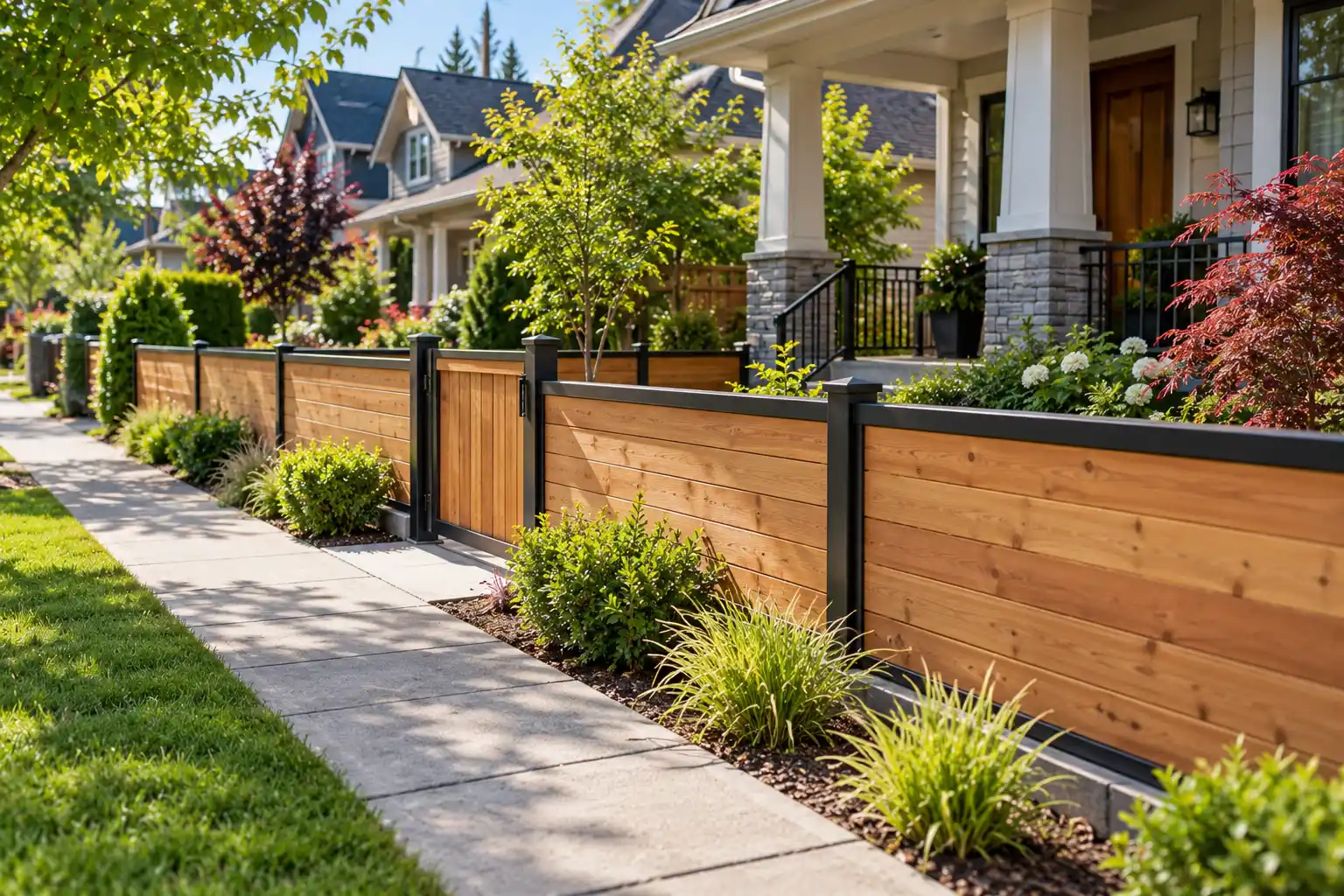 What Seattle's land use code says about fences in the front yard
The Seattle front yard fence code treats the street side of a lot differently from the back, with a lower limit, sight-line rules and a separate permit test.
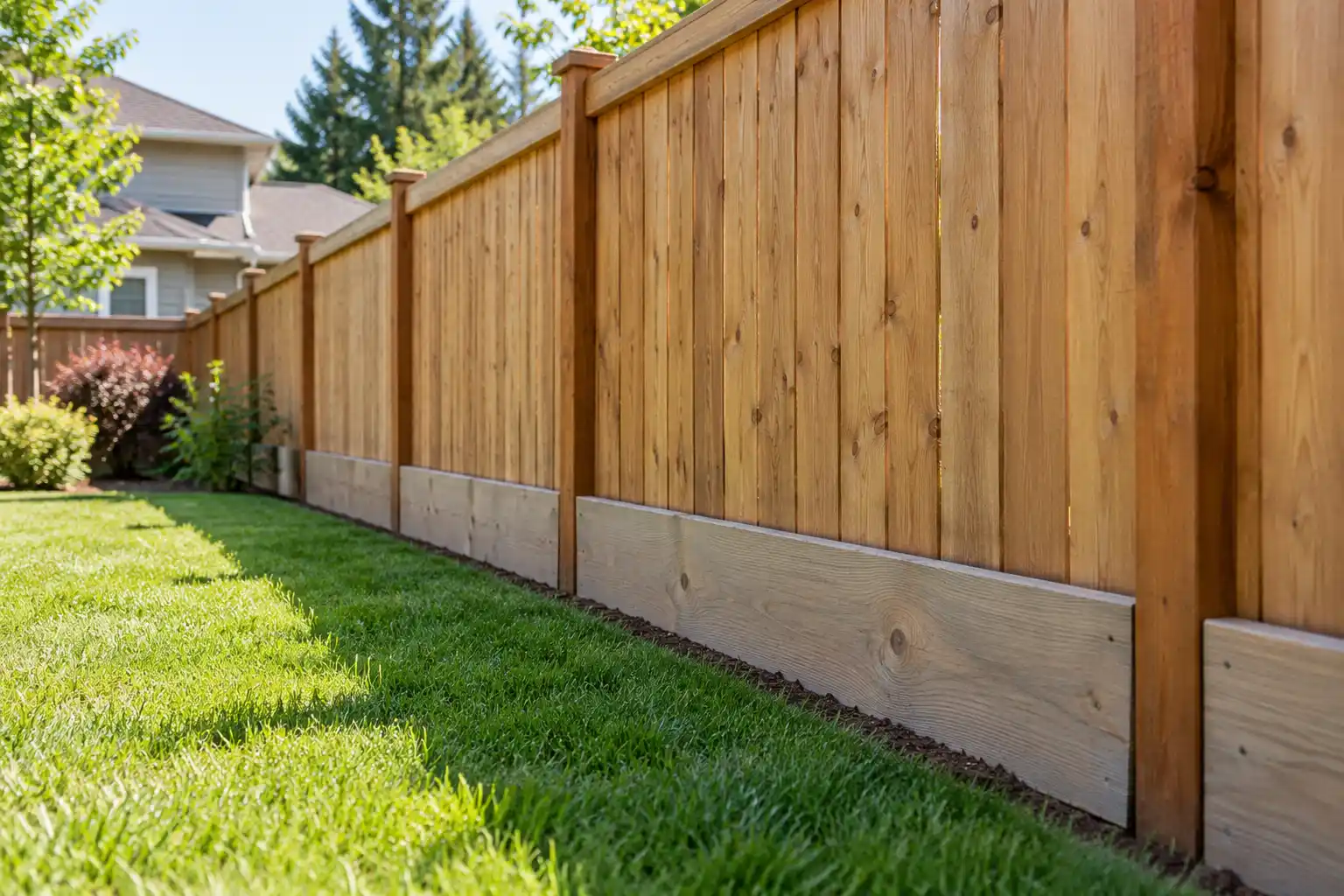 What a kickboard is and why cedar fences last longer with one
A fence kickboard is the sacrificial bottom board that keeps cedar pickets out of wet soil, and it is the cheapest way to add years to a Seattle fence.
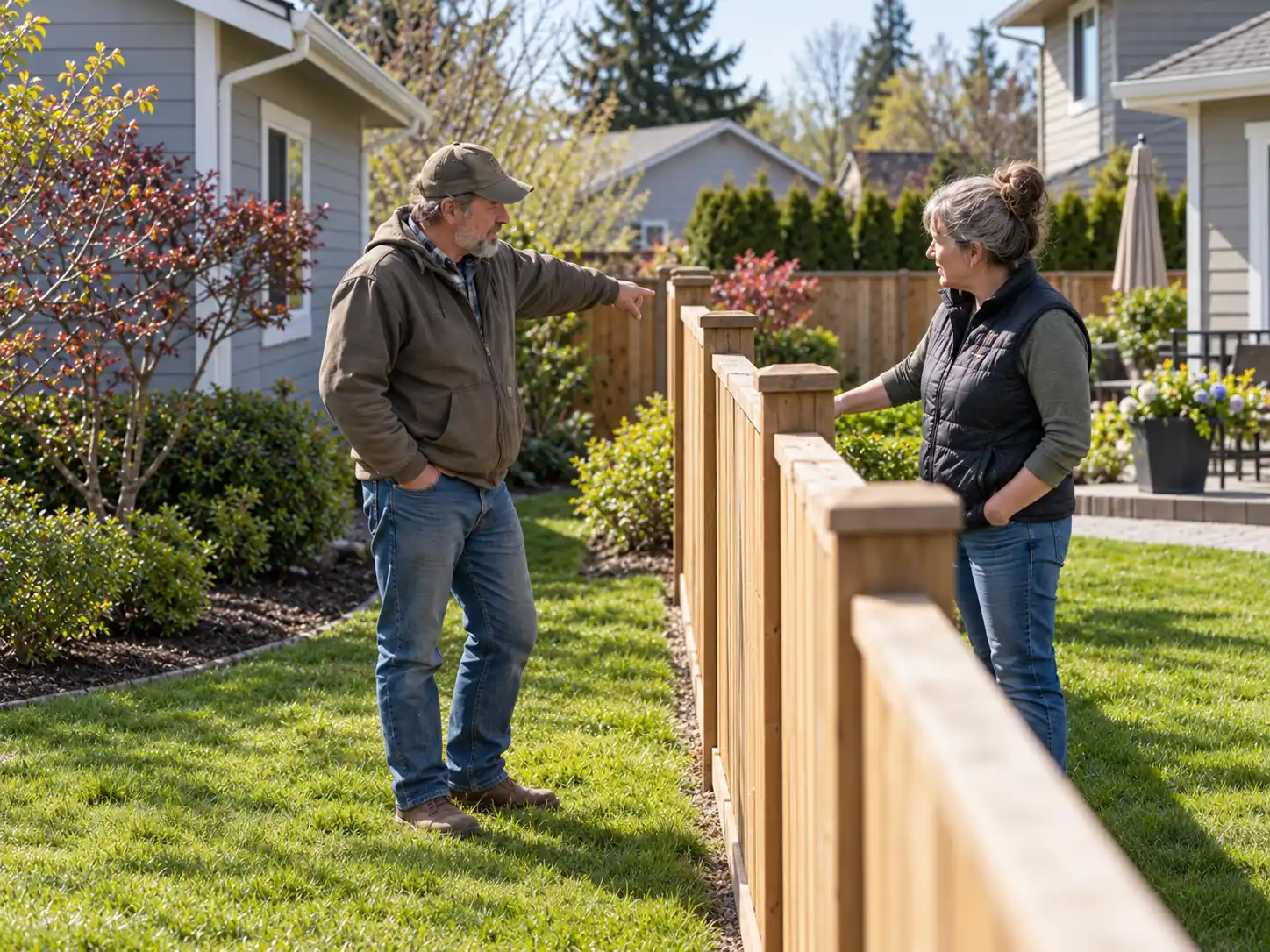 RCW 16.60.020 in plain English: splitting the cost of a boundary fence
RCW 16.60.020 in plain English: when a Washington neighbor must pay half the value of a boundary fence, when the statute is silent, and what to do first.
Planning a fence?
Price it in a minute with the calculator, or send a few photos for a free written estimate.