
RCW 16.60.020 in plain English: splitting the cost of a boundary fence
RCW 16.60.020 in plain English: when a Washington neighbor must pay half the value of a boundary fence, when the statute is silent, and what to do first.
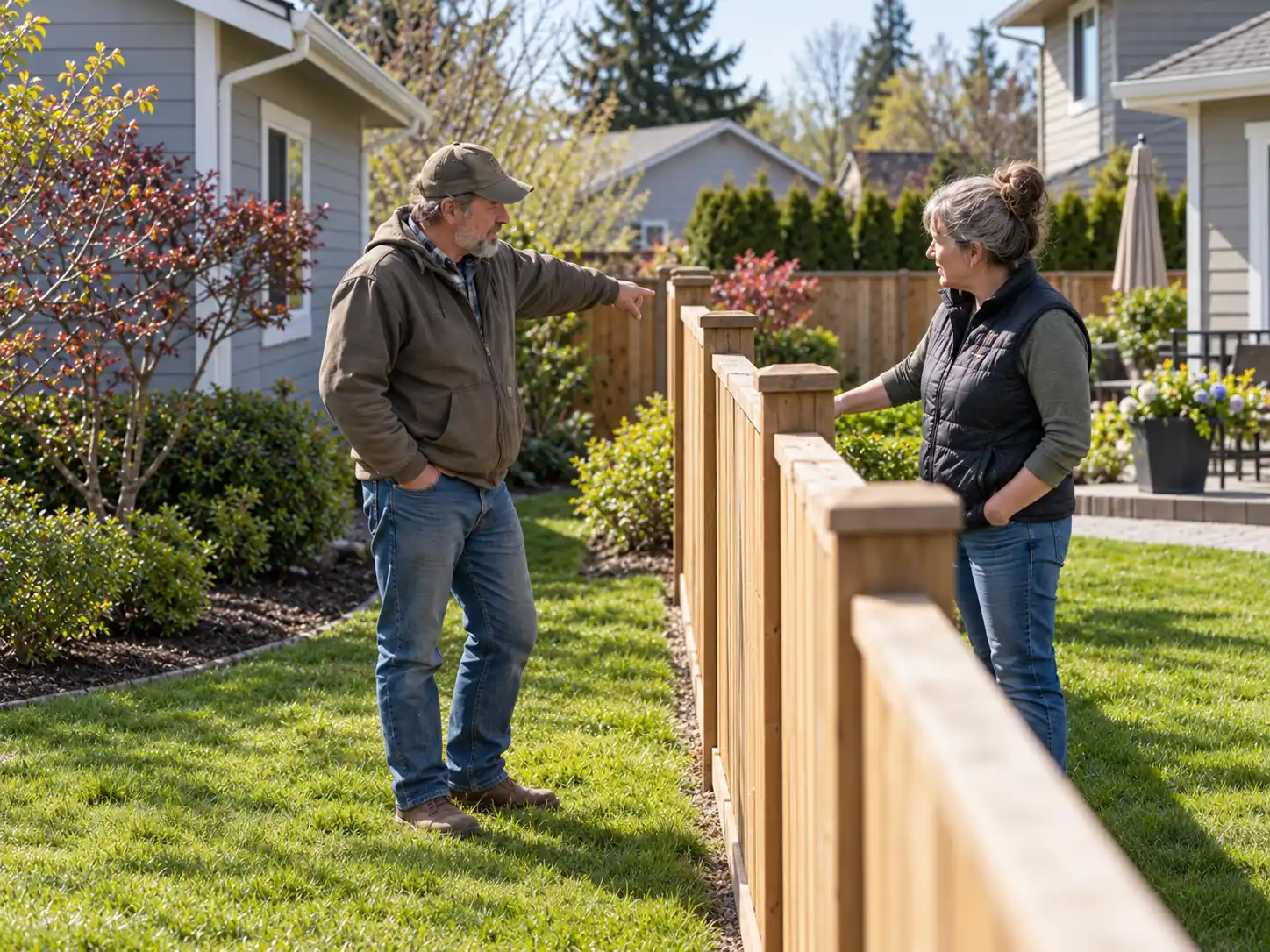
RCW 16.60.020 says that when your neighbor encloses their land using a fence you built on the property line, they owe you half the value of the shared section. It does not force a neighbor to help pay for a fence they never use, and it does not set the style or height.
- The statute is about reimbursement after the fact, not a permission slip to bill a neighbor up front. Read the boundary fence laws overview for the full chapter.
- The trigger is the neighbor enclosing their own land and relying on your fence to do it.
- The amount is half the value of the portion that serves as the partition fence, not half of your invoice.
- The text sits at app.leg.wa.gov; every summary, including this one, is a paraphrase.
What the statute actually covers (and the word "partition" it hinges on)
A partition fence is a fence that stands on the boundary and divides two enclosed parcels. The statute only engages when a fence becomes a partition fence in that sense: both sides fenced in, the shared run doing double duty.
The section describes one chain of events. One owner builds a fence along the line of their land. Later, the owner next door encloses their parcel too, using that fence as one side. At that moment they owe the first owner half the value of the shared portion.
The section carries one odd exception from its farm-country origins. A neighbor does not owe the extra cost of hog-tight fencing unless they also build hog fencing and use the shared run to pen hogs. For a Seattle backyard this clause is a curiosity, but it shows the drafters' logic: you pay for the fence you actually use.
What this means for you:
1. If you build first and your neighbor later fences in their lot using your fence, you are owed half the value of the shared section.
2. If your neighbor built first and you now close your yard against their fence, you owe them, and it is better to settle that before you tie into it.
3. If neither of you encloses your land, or the fence stands inside one parcel rather than on the line, the section has nothing to say.
Three situations where homeowners misread it
Most disputes we hear about come from reading a reimbursement rule as a cost-sharing contract.
| Situation | Does 16.60.020 apply | What to do first |
|---|---|---|
| You want a new fence and the neighbor to pay half | Not yet; it only applies once their land is enclosed using the fence | Propose a written split before building |
| The old shared fence needs repair or replacement | Only indirectly; the neighboring sections on partition fence upkeep are the better fit | Agree on scope using a replacement assessment |
| The neighbor refuses to contribute | Yes, if their yard is enclosed by your fence; no, if their side is open | Document the enclosure, then send a written request |
New fence, neighbor has not agreed
The statute does not let you build and then invoice. Until the neighbor's land is enclosed with your fence as one side, there is no duty to reimburse. A written agreement before the first post is the only tool that works.
Repair of an existing shared fence
Repair of a partition fence is governed by the sections that follow 16.60.020 in the same chapter. Those sections speak to each owner maintaining a fair share and assume the fence is already shared.
Neighbor who benefits but will not pay
This is the case the statute was written for. If their yard is closed in and your fence is one wall of that enclosure, the half-value claim exists. Collecting it is a civil matter, not something the city or we can enforce.
What the law does not decide for you (style, height, who builds)
The statute is silent on everything about the fence except who reimburses whom. It does not choose the material, the pattern, which side the rails face, or whether the fence is solid or open.
Height is governed by your city's zoning, not by the RCW. The limit for your zone lives on our height rules by city page, and no neighbor agreement overrides it.
Who builds is also open. The statute does not require the first builder to hire a contractor, obtain the neighbor's approval, or match an existing fence on the line. It measures value rather than cost, so a poorly built fence is worth less to the neighbor than its invoice.
The property line itself is not something the statute locates. If the two of you disagree on where the line runs, a survey settles that before any fence question can be asked.
The sequence that keeps a cost-share from turning into a dispute
A shared fence goes smoothly when the paperwork comes before the posts. This is the order we suggest to every customer who plans to split a fence with a neighbor.
1. Give written notice of what you intend to build and where, even if you have already talked.
2. Agree the line, with a survey if either side has doubt about the pins.
3. Agree the specification: material, pattern, which face points where, and gate locations.
4. Agree the split in writing, as a share of the quote, not of an estimate.
5. Keep the quote, the agreement and the paid invoice together, because the value question may come up when either house sells.
If a neighbor will not engage at any step, build inside your own line and keep the fence yours.
When to rely on the statute and when to just agree
Rely on 16.60.020 only after the fact, when a neighbor has enclosed their lot against a fence you paid for and refuses to contribute. In every other case a signed agreement before the build is faster and friendlier than a statute written for farmland.
Our boundary fence law guide covers the rest of the chapter, including fences built on the wrong line.
FAQ
Does the law apply to a fence that isn't exactly on the line?
No. The section speaks of a fence built on the line of the builder's land. A fence set inside your parcel is your fence alone, and the neighbor who gains privacy from it owes nothing. Some owners deliberately build a short distance inside the line for that reason.
Can my neighbor make me pay for a fence I didn't want?
Only if you enclose your land using it. If your yard is open on another side, or you fence inside your own line without tying into theirs, the half-value claim never arises. The duty comes from use, not from the fence being next to you.
What counts as "enclosed" land under the statute?
The section does not define it, so the ordinary meaning applies: a parcel fenced on all sides, with the shared fence forming one of them. A yard open to the alley or to the street is not enclosed in that sense, and the duty does not attach.
Does the statute cover a fence that only I use?
No. If only your yard is closed in and the neighbor's side stays open, the fence is not a partition fence and the section does not apply. The neighbor's later decision to fence their yard against yours is what changes its status.
Is a verbal agreement enough?
A spoken deal can be binding, but it is almost impossible to prove when a house changes hands. Put the split, the specification and the line in writing and keep it with the invoice. Our FAQ covers other neighbor questions we hear often.
More From the Blog
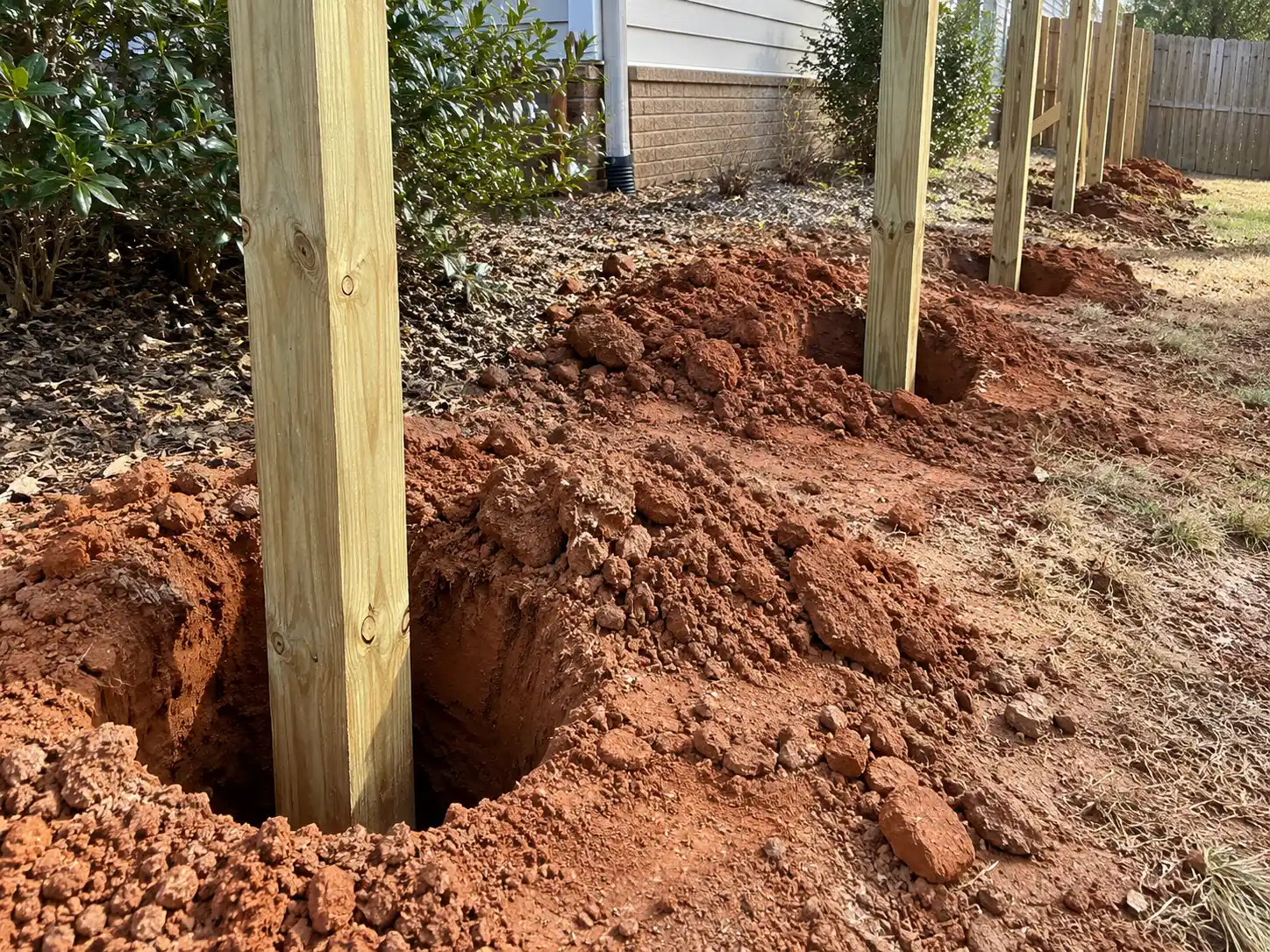 Concrete, gravel or steel: how we set fence posts in Puget Sound clay
How fence posts in clay soil survive Puget Sound wet stretches, and how we choose between concrete, gravel and steel footings for each fence line.
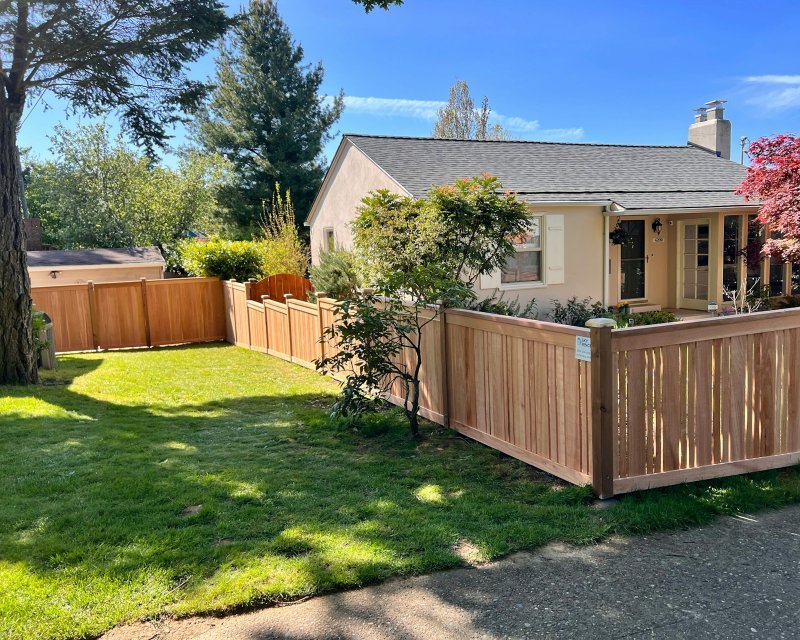 Planning
 a New Fence in Seattle: A Step-by-Step Guide
From measuring the line to the final walkthrough: rules, neighbors, utility locates, materials and budget, in the order that keeps a Seattle fence project simple.
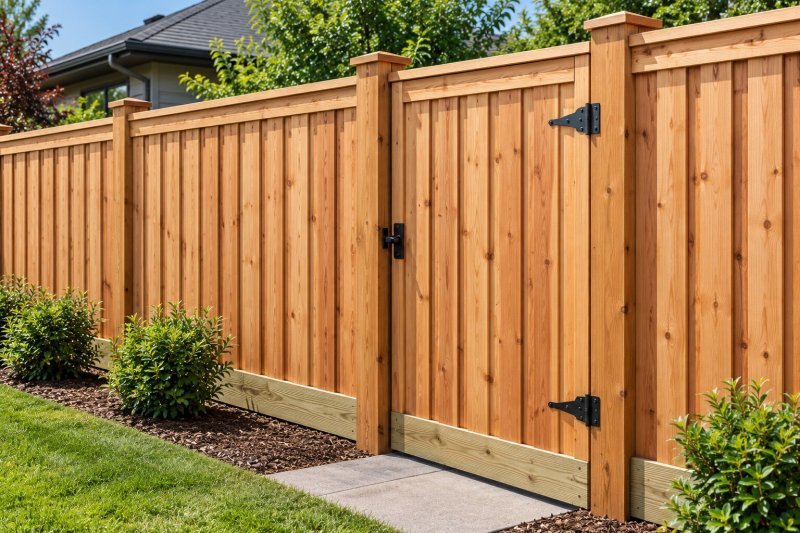 Hiring & Costs
How to Check a Fence Contractor in Washington Before You Hire
Verify a Washington fence contractor in minutes: L&I registration, bond and insurance, what a written estimate should include, and the red flags to watch for.
Planning a fence?
Price it in a minute with the calculator, or send a few photos for a free written estimate.