
What Seattle's land use code says about fences in the front yard
The Seattle front yard fence code treats the street side of a lot differently from the back, with a lower limit, sight-line rules and a separate permit test.
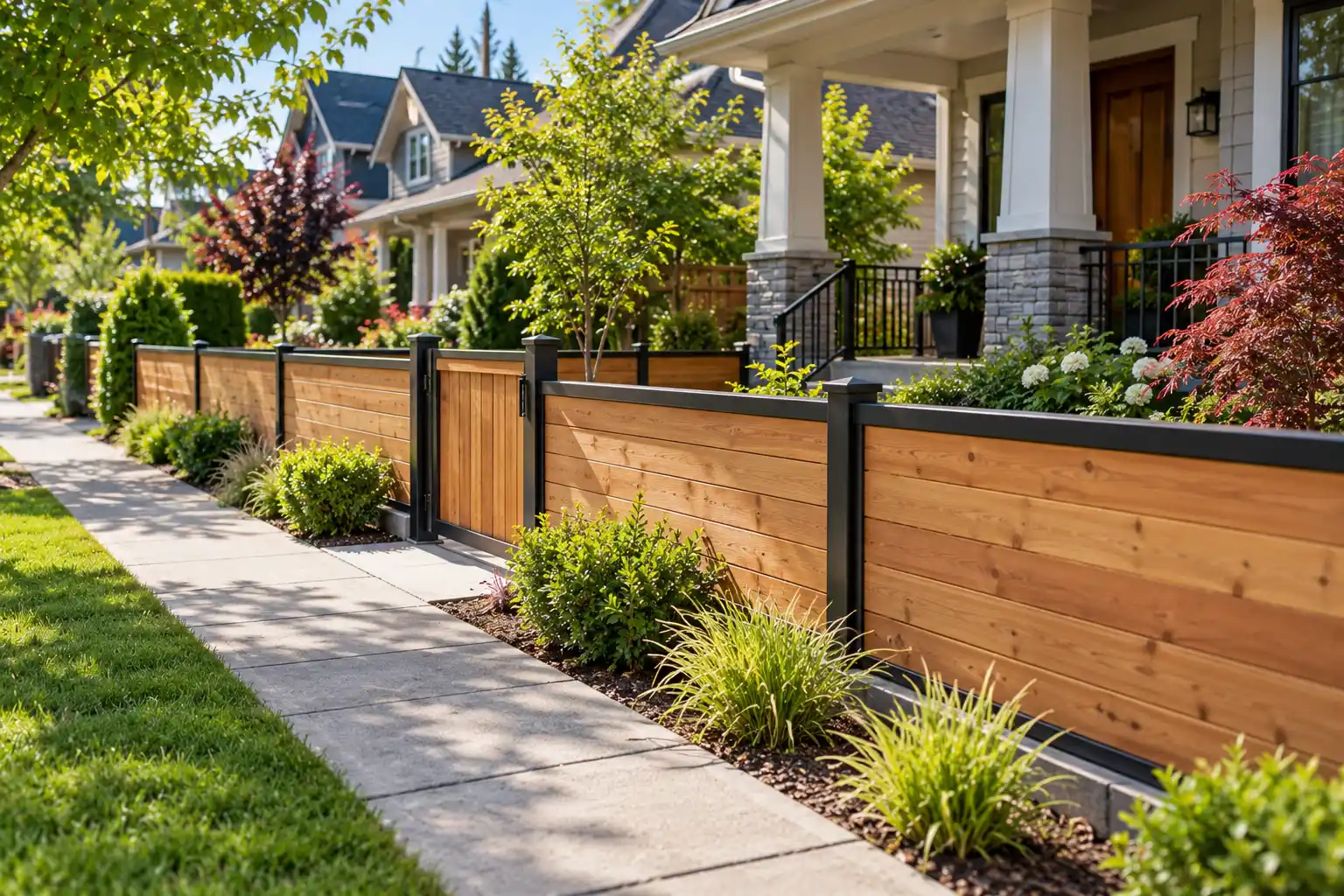
Seattle's Land Use Code holds a front-yard fence to a lower limit than a side or rear fence and protects sight lines at driveways and corners. A separate test decides whether a permit is needed. The exact figures are on our Seattle pages; this post explains how the code thinks.
Front yard, defined: the strip of a lot between the front lot line along the street and the required front setback line where the house may begin.
- The front-yard limit is lower than the side and rear limit; the figure for your zone is on the height rules by city page.
- Whether a permit is required depends on overall height and on any masonry or concrete in the fence; see the Seattle permit guide.
- A corner lot has a front yard on each street frontage, so the lower limit applies on two sides.
- Sight-triangle rules at driveways and intersections apply regardless of the height limit.
How the code defines the front yard on a Seattle lot (corner lots have two)
The code measures the front yard from the lot line that faces the street, not from the sidewalk or the curb. On many older Seattle lots the front lot line sits behind the sidewalk, so part of what looks like your yard is right-of-way.
A corner lot faces two streets, and the code treats both frontages as front yards for fence purposes. The side of the house that feels like a side yard is, in code terms, a second front yard with the lower limit.
Through lots, which touch a street at both ends, carry the same logic at both ends. Alley frontage does not create a front yard, but it does create a sight-line obligation where the alley meets the street.
What this means for you:
1. Find your front lot line before you plan the fence, because the sidewalk is not a reliable marker.
2. On a corner, plan for the lower limit on both street sides, not just the one with the front door.
3. The rear and side limits only apply once the fence passes the front setback line.
What the front-yard rules are protecting (sight lines, street character, access)
The lower front-yard limit exists so drivers and pedestrians can see each other, so streets do not read as walled corridors, and so the house stays reachable from the sidewalk.
Sight lines are the safety reason. A solid fence at the street hides a child stepping off the curb and a car backing out of a driveway. The code answers that with a lower limit near the street and a clear-view requirement at driveways.
Street character is the planning reason. Seattle's residential zoning assumes front yards stay open, so a block reads as gardens rather than walls.
Access is the practical reason. Emergency responders and utility crews expect to reach the front of a house from the street. A tall solid fence with a locked gate across the whole frontage works against that.
| Where the fence stands | What the code cares about | Where to check the exact figure |
|---|---|---|
| Along the front lot line | Height, opacity near driveways, permit threshold | Height rules by city |
| Within the front setback, back from the line | Height, and whether a retaining wall adds to it | Seattle permit guide |
| At a driveway edge or street corner | Clear sight triangle; height and opacity inside it | Seattle fence contractor page |
| Past the front setback line, along a side or rear line | Side and rear limit; boundary rules with the neighbor | Shared fence cost post |
When a front fence needs a permit and when it doesn't
Most front-yard fences in Seattle fall below the permit threshold, because the front-yard height limit is lower than the point at which a construction permit kicks in. The permit question and the zoning question are separate, and passing one does not mean passing the other.
A construction permit is about structure: overall height and whether the fence includes masonry or concrete above a certain point. A zoning rule is about placement: how tall a fence may be in a given yard of a given zone.
Three things push a front fence toward a permit. Building it on a retaining wall, so the combined height crosses the threshold. A masonry or concrete base taller than the exempt figure. And an overlay, such as a historic district or a critical area near a slope or stream.
The Seattle fence permit guide holds the thresholds. The Seattle Department of Construction and Inspections publishes the underlying rules at seattle.gov/sdci.
Driveways, alleys and the sight-triangle clause
A sight triangle is the wedge of space at a driveway or street corner that must stay clear of anything tall and solid so drivers can see cross traffic. The code measures it from where the driveway or alley meets the street, back along both edges.
The clause bites in three places: where your driveway crosses the sidewalk, where an alley enters the street beside your lot, and at the corner itself on a corner lot. A fence built to the full front-yard limit may still have to drop or open up inside each triangle.
Open designs solve most of this. A picket or ornamental panel inside the triangle keeps the line of the fence while letting a driver see through it. A hedge inside the triangle counts the same as a fence.
Where a solid fence is the whole point, the fix is geometry. Pull the fence back from the driveway edge, or angle the last panel away from the street. Our Seattle fence contractor page shows how we lay this out on site.
Our order of checks before we build at the street
We check in this order: locate the front lot line, confirm the zone and its front-yard limit, mark every sight triangle, then test the design against the permit threshold. A fence that passes those four checks in that order rarely has a problem later.
Before you plan a front fence, read the Seattle fence permit guide and then ask us to walk the frontage with you.
FAQ
Does a hedge count as a fence under the code?
For sight triangles, yes: anything solid in the triangle is treated the same, living or built. For the front-yard height limit, hedges are generally treated as landscaping rather than structures, though a hedge grown on a wall or frame can be read as a fence.
Can I build a taller fence by stepping it back from the sidewalk?
Only once the fence sits behind the front setback line, where the side and rear limits take over. Stepping back within the front yard does not change the limit. The front yard runs to the setback line, not just to the sidewalk.
What if my lot is in a historic district?
Design review applies on top of the zoning rules. It can govern material, style and placement at the street even when the height is within the limit. Fences visible from the street are what the review board cares about, and the review adds time before any permit is issued.
Does a retaining wall plus fence count together?
In most cases the code measures the combined height from the lower grade when a fence sits on a wall. A modest fence on a tall wall can therefore exceed the limit. The permit guide explains how the combination is measured.
Who enforces front-yard fence rules in Seattle?
The Seattle Department of Construction and Inspections handles both permits and zoning complaints. Enforcement usually begins with a neighbor complaint, and the outcome is typically a notice to lower or modify the fence. See our FAQ for how we handle that review.
More From the Blog
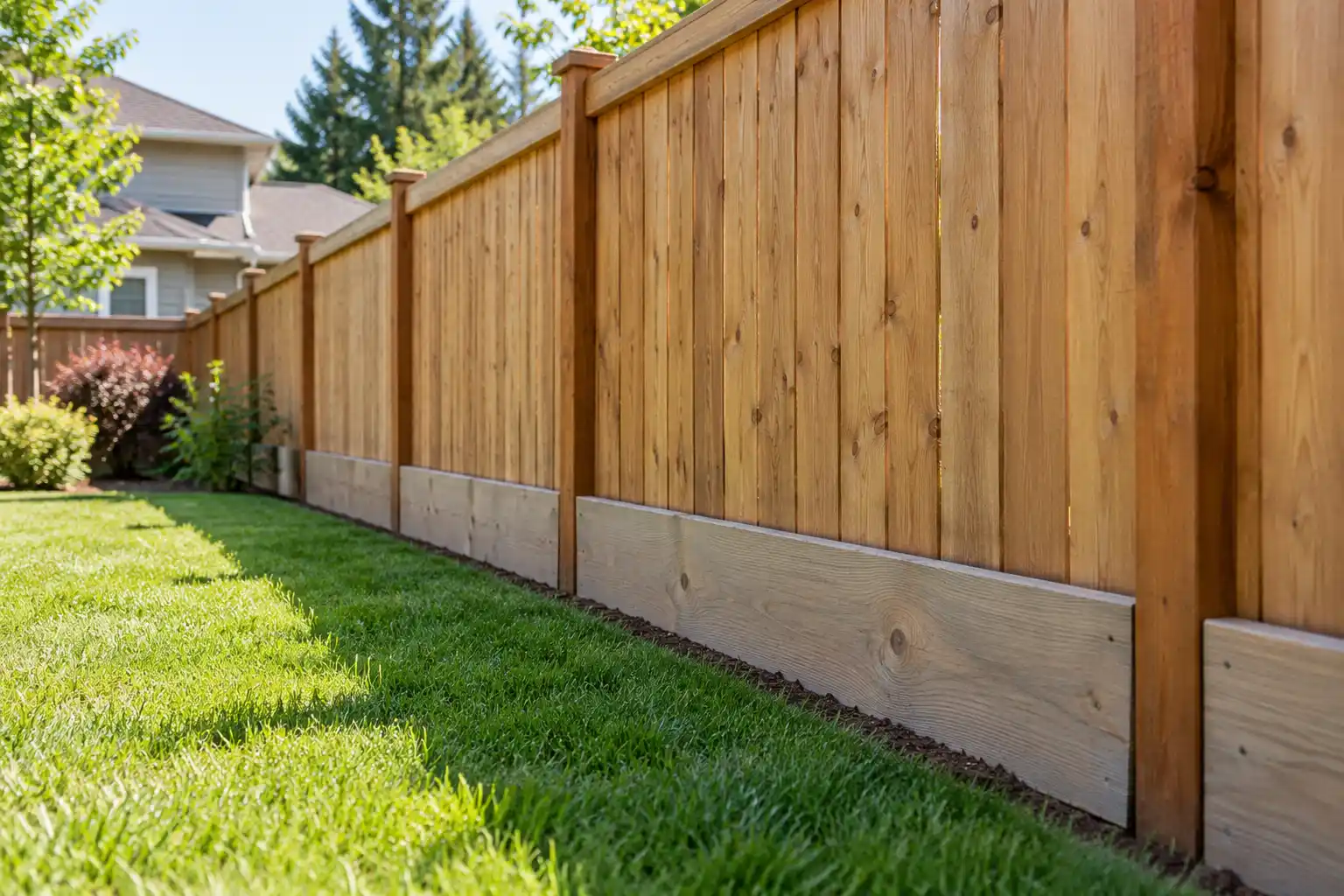 What a kickboard is and why cedar fences last longer with one
A fence kickboard is the sacrificial bottom board that keeps cedar pickets out of wet soil, and it is the cheapest way to add years to a Seattle fence.
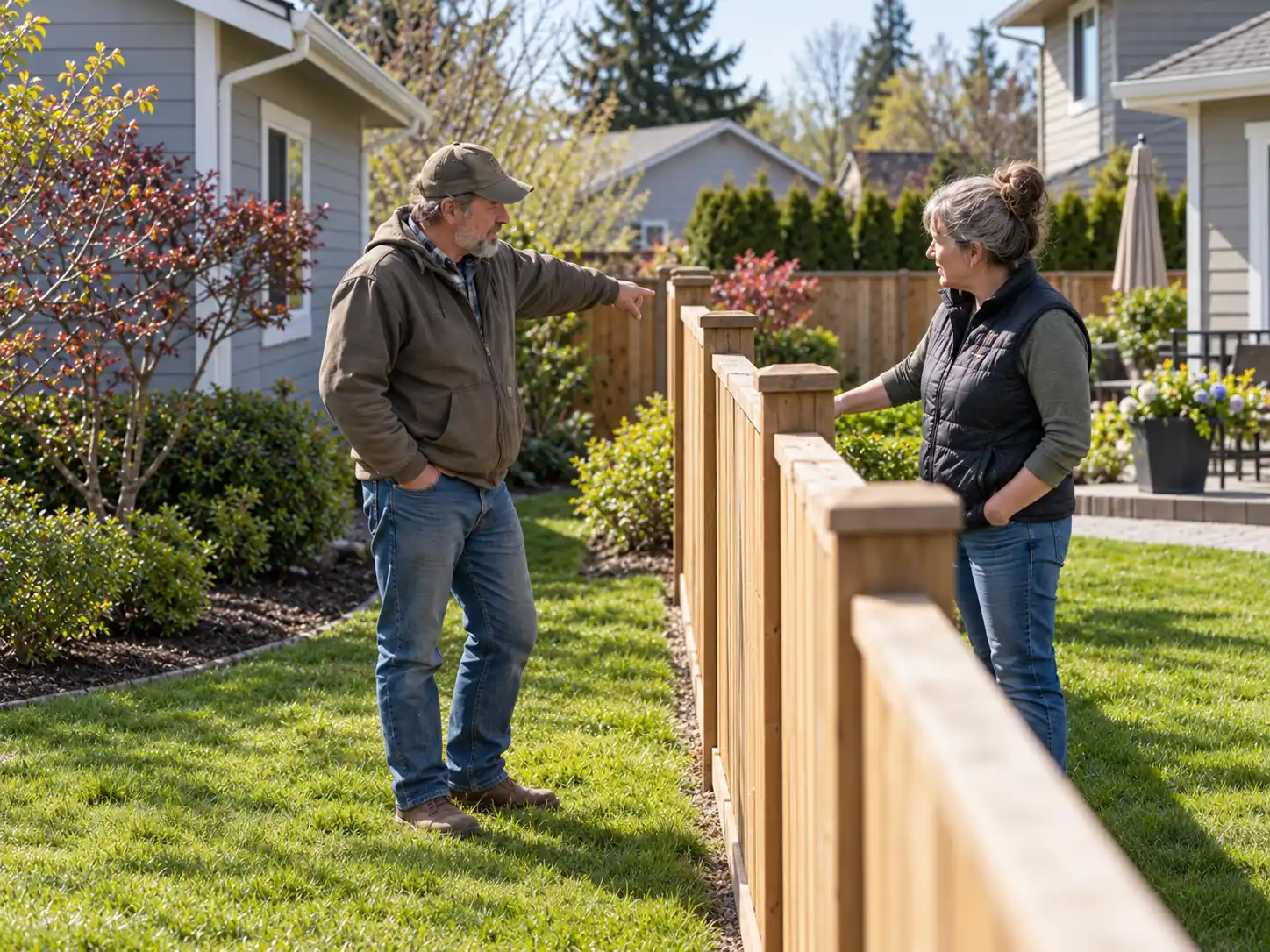 RCW 16.60.020 in plain English: splitting the cost of a boundary fence
RCW 16.60.020 in plain English: when a Washington neighbor must pay half the value of a boundary fence, when the statute is silent, and what to do first.
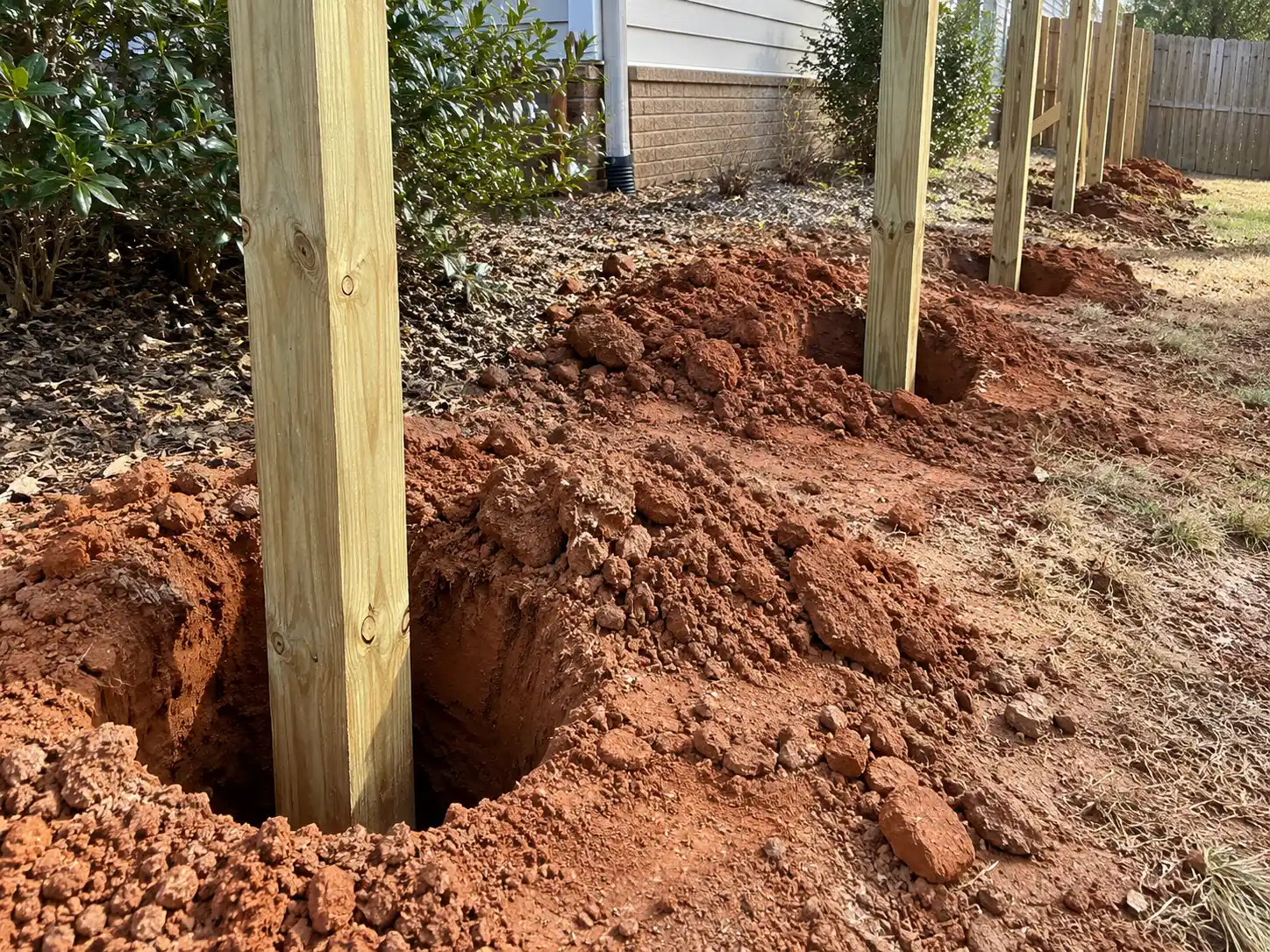 Concrete, gravel or steel: how we set fence posts in Puget Sound clay
How fence posts in clay soil survive Puget Sound wet stretches, and how we choose between concrete, gravel and steel footings for each fence line.
Planning a fence?
Price it in a minute with the calculator, or send a few photos for a free written estimate.