
What a kickboard is and why cedar fences last longer with one
A fence kickboard is the sacrificial bottom board that keeps cedar pickets out of wet soil, and it is the cheapest way to add years to a Seattle fence.
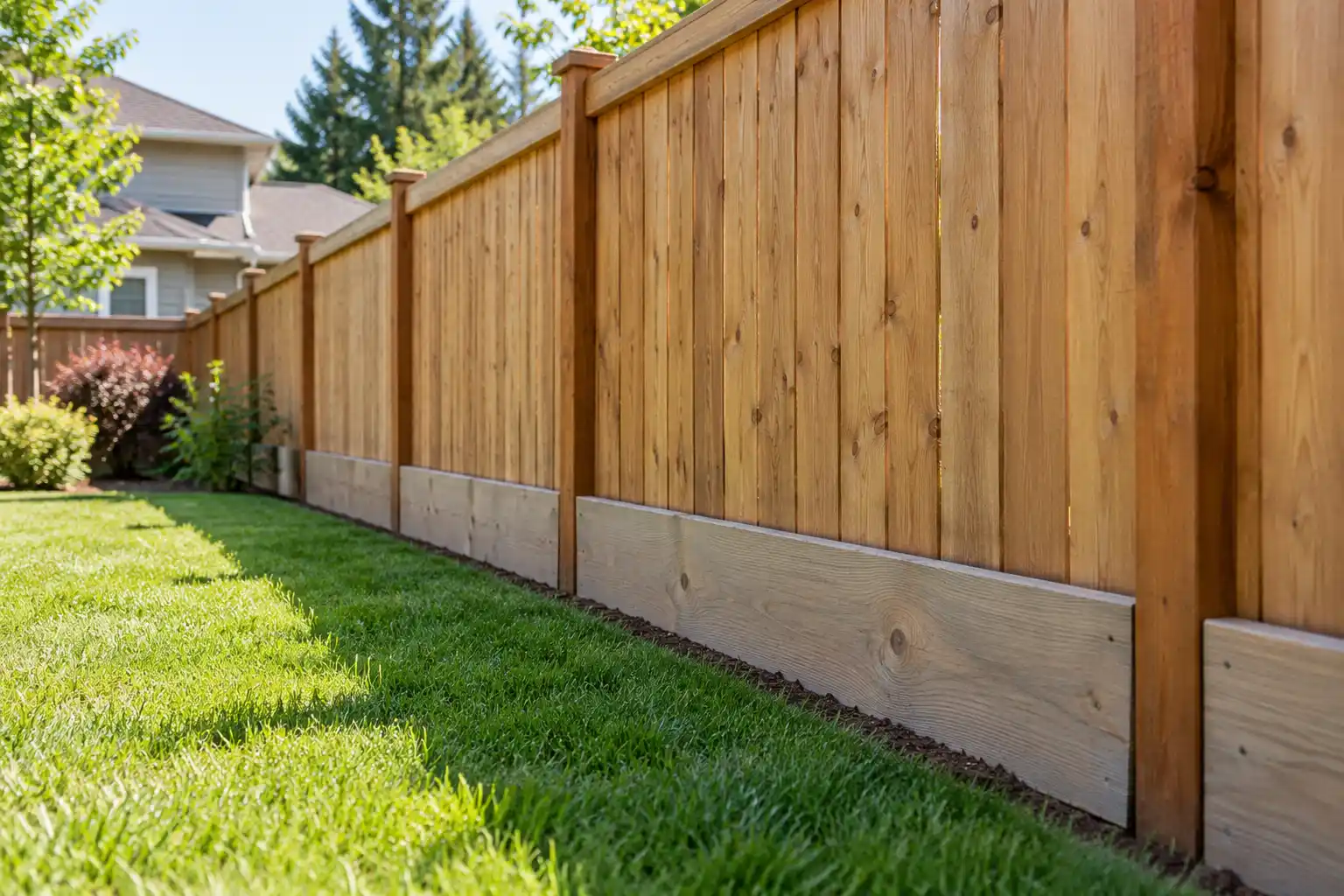
A fence kickboard is a single horizontal board that runs along the bottom of the fence, under the pickets. It takes all the contact with soil, mulch and splashing rain. It rots so the pickets do not, and it can be replaced on its own. That is why a cedar fence with one outlasts a fence without.
Kickboard, defined: the sacrificial board at the base of a fence that keeps every picket above the wet ground and is meant to be swapped out when it fails.
| | Fence without a kickboard | Fence with a kickboard |
|---|---|---|
| What touches soil | The bottom end of every picket | One board, edge-on |
| What rots first | The picket ends, all along the run | The kickboard only |
| What gets replaced | Pickets, often whole sections (repair service) | One board between posts |
| How mowing and trimming affect it | String trimmer chews picket ends; mower deck hits them | Trimmer line hits a thick flat board that is built to take it |
Kickboard, rot board, baseboard: one part, three names
Kickboard, rot board and baseboard all mean the same piece of lumber. "Rot board" is the honest name, because its job is to rot in place of something harder to fix. "Kickboard" comes from the way it takes a boot, a mower or a dog at ground level.
Some builders also say "mud board" or "bottom rail," though a bottom rail is a different member that carries the pickets. The kickboard sits below or in front of that rail and is not structural.
Whatever the name, the test is simple: if the pickets stop short of the soil and a flat board fills the gap below them, the fence has a kickboard.
Where the kickboard sits and what it is made of
The kickboard runs between posts at ground level, on the same face as the pickets or just behind them, with the pickets resting on its top edge. On a cedar privacy fence it is the thickest board in the panel. A thin board at the soil line would be gone in a few wet winters.
Pressure-treated lumber is the usual choice because it resists soil contact better than cedar at the same thickness. The trade-off is color: treated wood weathers differently than the cedar above it. Stain evens that out, and the board sits low enough that most people never notice.
Cedar kickboards exist, and some HOA-governed subdivisions on the Eastside prefer them for a uniform look. Cedar in soil contact gives up some of its life, so we cut cedar kickboards thicker and expect to replace them sooner.
The board's thickness matters more than its species. A heavy board stays flat as it wets and dries, holds a trimmer hit, and takes longer to rot through from the soil side. We never use picket stock for a kickboard.
What happens to a cedar fence that runs its pickets to the ground
Pickets that touch the soil wick water up the end grain and start to rot from the bottom within a few wet seasons. Cedar heartwood resists decay well, but every picket end is open grain sitting in the wettest part of the yard. No stain seals end grain for long.
The damage is hidden at first. The bottom of each picket darkens, then softens, then splits, and moss takes hold on the north-facing side. By the time a picket snaps when the mower bumps it, the rot has climbed every picket along that run.
Repairing that fence means replacing pickets, not one board. Each picket must be pulled, its fasteners removed from the rail, and a new one cut and fixed in place. That is a day of work to fix damage one replaceable board would have absorbed.
A fence can also be built with a clear gap under the pickets and no kickboard at all. That works where the ground is flat and the gap stays open. On Seattle's sloped lots the gap closes on the uphill side as soil and mulch migrate, and the pickets are back in the dirt. Our page on how long a cedar fence lasts covers the other factors that shorten its life.
Replacing a kickboard without taking the fence apart
A failed kickboard comes out from the outside without disturbing the pickets or rails, one bay between two posts at a time.
1. Scrape soil and mulch away from the board on both faces so you can see where it ends and where the fasteners are.
2. Back out the screws or pull the nails that hold the kickboard to the posts and to the bottom rail or cleats.
3. Slide the old board out sideways, or split it lengthwise and pull the pieces if the pickets pin it in place.
4. Clear the trench so the new board sits clear of standing water, and lay a bed of crushed rock if the spot stays wet.
5. Cut the new board to the post spacing, set it on the rock bed and fasten it to the posts and cleats with exterior screws.
6. Stain or seal the new board, including the bottom edge, before backfilling.
If the posts themselves have gone soft at the soil line, a new kickboard will not save the section. Our post on how we set posts in Puget Sound clay explains the footing side of the same problem.
The fences where we always add one
We put a kickboard on every solid cedar fence that meets soil, mulch or lawn. Any fence on a slope gets one too, because the ground will creep toward the pickets. We skip it only on open picket fences above a paved or gravel surface, and on vinyl or metal fences that do not rot.
A cedar fence from Vista Fence is built with one from the start, and we can show you why on site.
FAQ
Does a kickboard stop dogs from digging under?
It slows a digger but does not stop a determined one. The board gives the dog a flat surface to dig against rather than a gap to push through, which helps with most pets. For a dedicated digger we bury wire mesh or set the kickboard deeper.
Can a kickboard be added to an existing fence?
Yes, if the pickets end a board's width above the soil. If the pickets reach the ground, they are trimmed along the bottom first. The kickboard is then fastened to the posts and to cleats on the rail. Our fence repair crew does this as a standalone job.
Should the kickboard be stained the same as the fence?
Stain it with the same product so the color weathers evenly, but expect the treated board to take the stain a little differently than cedar. A darker tone on the whole fence hides the difference best. Seal the bottom edge before installation, since no one can reach it afterward.
Does a vinyl fence need a kickboard?
No, because vinyl does not rot. Some vinyl panels include a bottom rail near the ground that does the same job cosmetically. Where a vinyl fence runs down a slope, we close the downhill gap with a vinyl filler strip rather than a wood kickboard. See fence materials for how each type handles the ground.
Why does the kickboard sometimes sit above the ground?
On well-built fences the kickboard clears the soil by a small gap so water does not pool against it. The gap also lets air move under the fence, which keeps the board drying between rains. Where the ground has settled, that gap may be larger than the builder left it.
More From the Blog
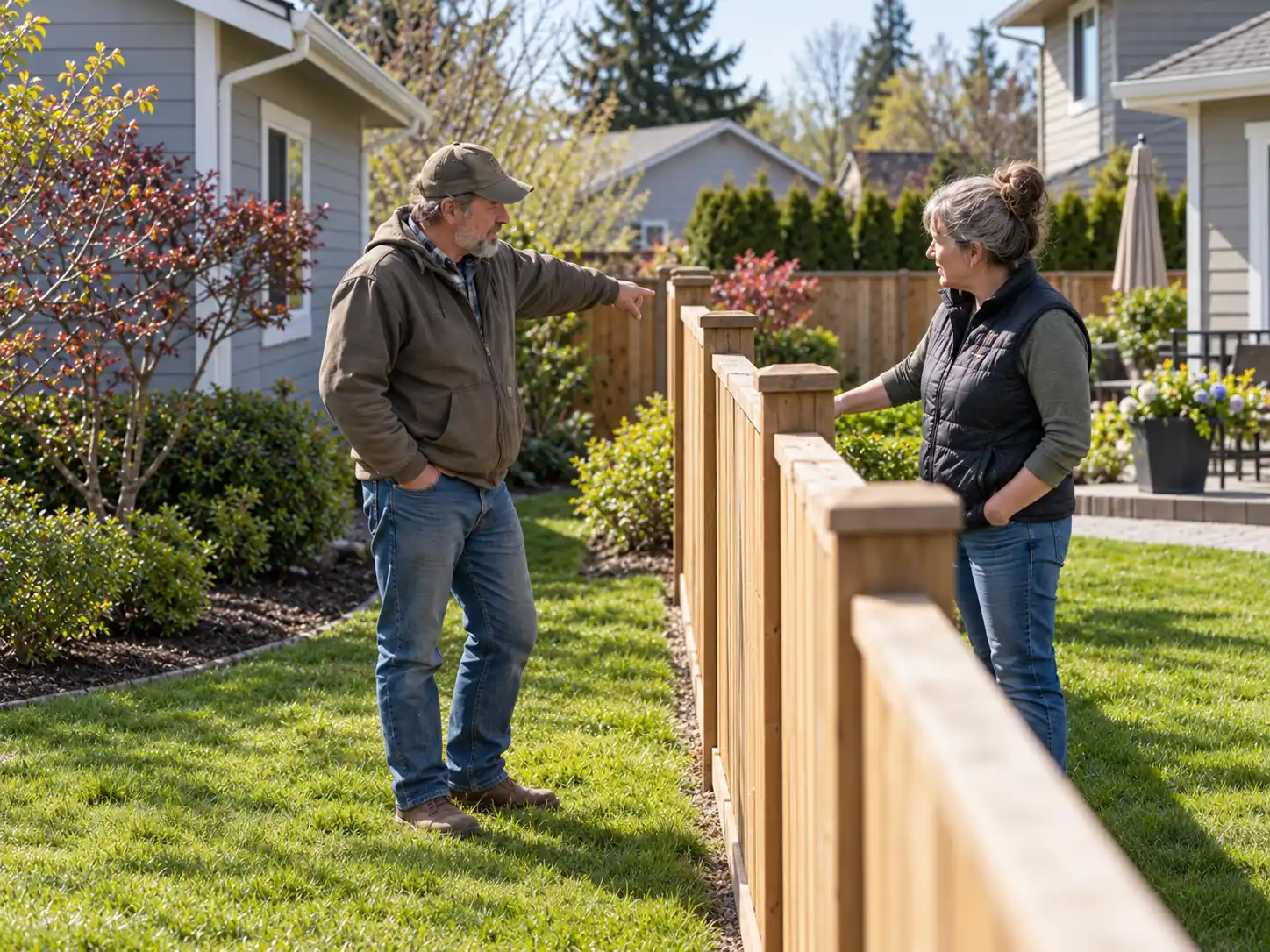 RCW 16.60.020 in plain English: splitting the cost of a boundary fence
RCW 16.60.020 in plain English: when a Washington neighbor must pay half the value of a boundary fence, when the statute is silent, and what to do first.
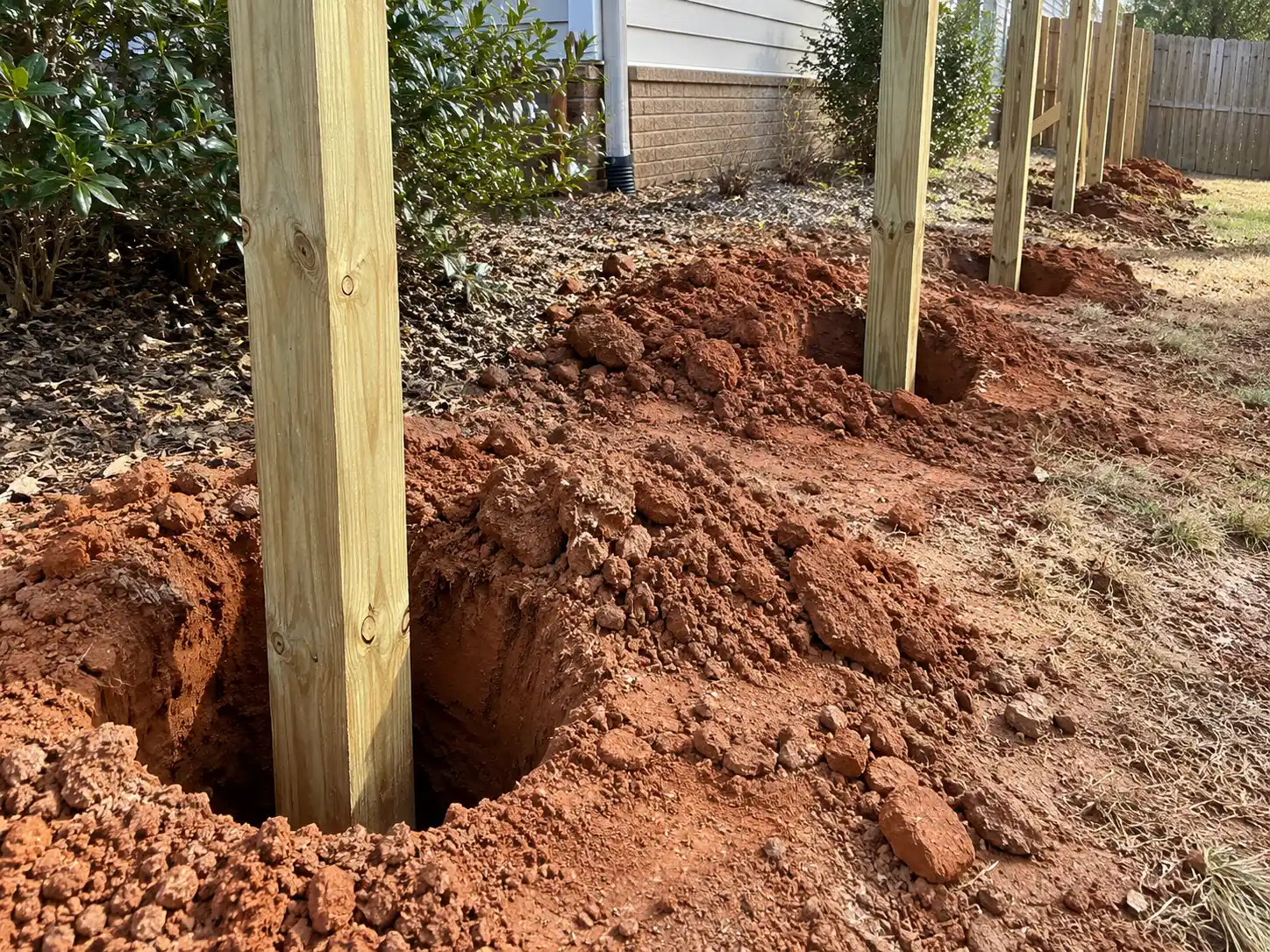 Concrete, gravel or steel: how we set fence posts in Puget Sound clay
How fence posts in clay soil survive Puget Sound wet stretches, and how we choose between concrete, gravel and steel footings for each fence line.
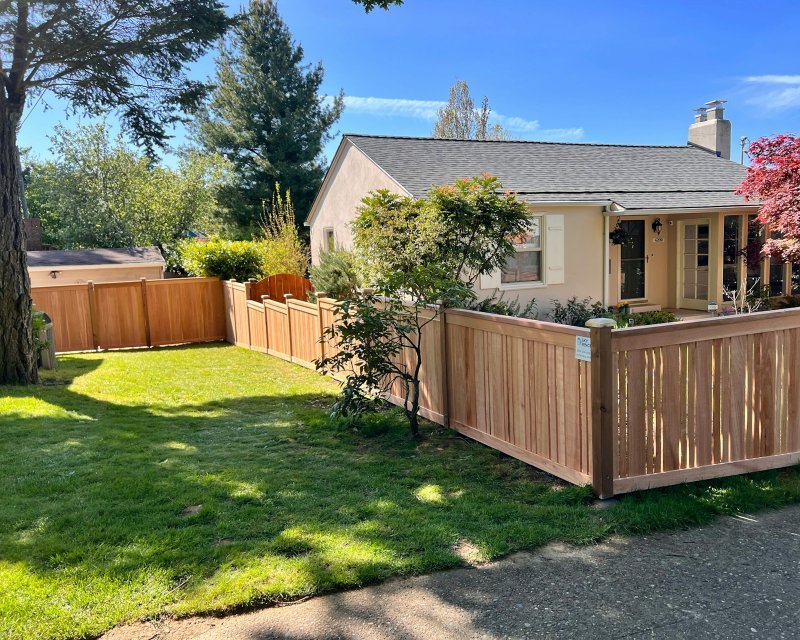 Planning
 a New Fence in Seattle: A Step-by-Step Guide
From measuring the line to the final walkthrough: rules, neighbors, utility locates, materials and budget, in the order that keeps a Seattle fence project simple.
Planning a fence?
Price it in a minute with the calculator, or send a few photos for a free written estimate.