
Concrete, gravel or steel: how we set fence posts in Puget Sound clay
How fence posts in clay soil survive Puget Sound wet stretches, and how we choose between concrete, gravel and steel footings for each fence line.
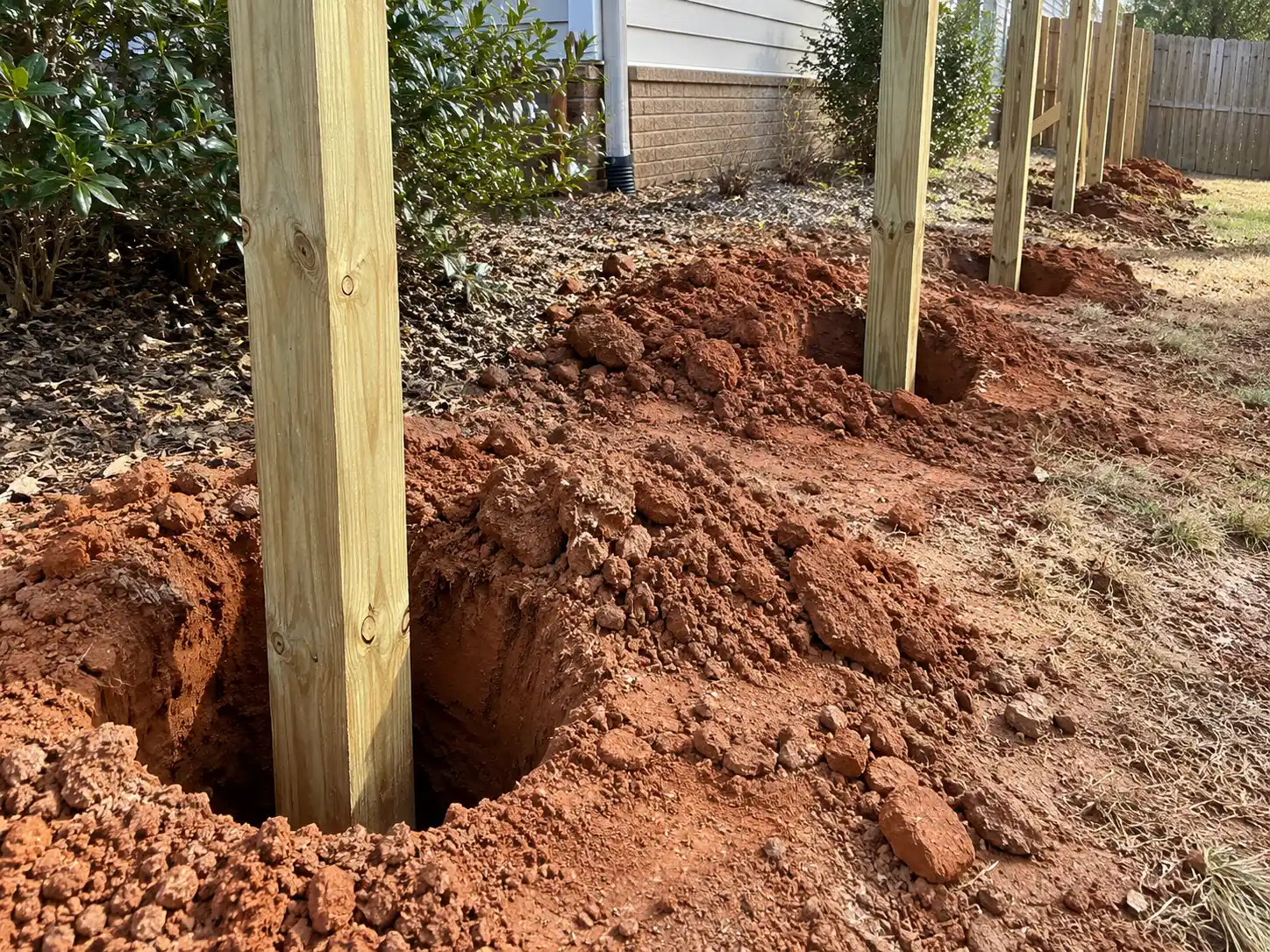
Clay that holds water is what kills fence posts around Seattle, so the footing method matters more than the post itself. We set most cedar fences in crowned concrete and switch to gravel footings where water needs a way out. Steel posts go on lines that have already failed at the ground.
| Footing method | What it does well in clay | Where it falls short |
|---|---|---|
| Crowned concrete | Holds a post rigid and sheds surface water when shaped right (installation method) | Traps water against wood if the top is flat or dished |
| Gravel drainage footing | Lets water drain past the post instead of pooling | Less stiff under a heavy gate or a tall solid panel |
| Steel post in concrete | Removes wood from the wet zone entirely (material options) | Needs brackets or sleeves to carry cedar rails cleanly |
Why clay is the real problem under a Seattle fence
Clay subsoil fails fence posts because it holds water around the post for weeks instead of letting it drain. Glacial till is the compacted mix of clay, silt, sand and stone that the ice sheet left across the Puget Sound lowland. It barely lets water through.
Dig a post hole into that layer and you have made a bucket. Rain fills it, the clay holds it, and the post stands in water until the surface dries out. The wood at the soil line stays wet long after the lawn looks dry.
The second problem is movement. Clay swells when wet and shrinks when dry, and each cycle shifts the soil around the footing.
So the question is never which footing is strongest. It is which footing keeps water off the wood and stays put while the clay moves. Our guide to materials that cope with Seattle weather covers the boards; this post covers what happens below them.
Concrete footings: strong, but only with the right shape
A concrete footing works in clay only when its top is crowned so water runs away from the post. The mass of the concrete resists wind load on a tall privacy panel, which is why it remains our default.
The shape at grade decides whether the post lives or rots. A flat or dished top collects water in the gap that opens between concrete and wood as the post shrinks. That gap becomes a reservoir, and the post rots at exactly that line.
We finish every concrete footing with a dome that rises against the post and slopes to the soil. The post gets a bed of drain rock beneath it so the bottom end grain is not sealed in concrete. On long solid runs we keep the footing wider at the base than at the top, which resists clay heave.
The flat-top collar we see on failed fences
Most rotted posts we replace stood in a flush concrete collar poured level with the lawn. If you see a flat ring of concrete around a post, assume it holds water.
Gravel footings: when drainage beats mass
A gravel footing keeps a post dry by letting water fall through crushed rock and away from the wood. Angular crushed gravel is tamped in layers around the post, so it locks together and holds a light fence nearly as firmly as concrete.
This method suits lots where the hole fills with water while we dig it. On those sites concrete would cure around a wet post and hold that water forever. Gravel also makes later repair easier, because a post can be pulled and reset without breaking out a concrete plug.
The limits are stiffness and height. A tall solid panel in a wind corridor off the Sound, or a gate post carrying a heavy leaf, needs more lateral resistance than tamped gravel offers. There we combine the two: drain rock below, concrete crown above.
Steel posts: the fix for fences that keep failing at the ground
Steel posts solve the ground-line problem by taking wood out of the wet zone altogether. A galvanized steel post set in concrete does not rot, so the cedar fence above can be rebuilt on the same posts.
We recommend steel where a fence has already been replaced once for post rot, and where a tall board fence faces open wind on a low, wet lot. Steel also carries a cedar privacy fence on a narrow city side yard where there is no room for a wider wood post.
The cedar rails attach with brackets or a wood sleeve. The method changes the look very little and changes the service life a great deal.
How we decide which footing a fence line gets
We pick the footing from four signals: how fast the test hole drains, what the fence will weigh and catch, how the lot has failed before, and how easy repair should be.
| Footing | Standing water in the hole | Wet-dry movement | Repair later | Where we use it |
|---|---|---|---|---|
| Crowned concrete | Sheds it at grade; drain rock below the post | Resists it when the base is wider than the top | Plug must be broken out | Most privacy and picket fences on well-drained lots |
| Gravel drainage footing | Drains it through the rock | Flexes slightly and resettles | Post pulls and resets without demolition | Low spots, wet corners, light open fences |
| Steel post in concrete | Irrelevant to the post; concrete still crowned | Resists it; nothing to rot if the clay shifts | Panels rebuild on the same posts | Replacement lines, windy runs, narrow side yards |
On a sloped Seattle lot the uphill posts may sit in dry till while the downhill posts sit in a seep. We treat them as two different fences.
Our footing rule for wet lots
If the hole holds water while we are digging, the post gets drainage before it gets mass. If the fence is tall, solid or carries a gate, it gets concrete on top of that drainage, crowned high. If the line has rotted out once before, it gets steel and the problem is over.
Our fence installation service starts with a look at your soil, not a catalog.
FAQ
Can I mix footing types on one fence?
Yes, and we often do. The low corner of a yard may need a gravel drainage footing while the rest of the run sits in crowned concrete. Gate posts and corner posts get the stiffest footing on the line regardless.
Does a gravel footing hold a gate post?
Not on its own for a solid gate. A gate post resists a lever load every time the gate swings, and tamped gravel lets it creep. We put drain rock under the post and concrete above, or we use a steel gate post where the leaf is heavy or wide.
Why do some concrete posts rot faster than bare posts?
Because a flat concrete collar holds water in the gap that opens as the post shrinks. A bare post in free-draining soil can dry out between storms, while a post in a dished collar never does. The concrete is not the problem; the shape of its top is.
Do steel posts show on a cedar fence?
Rarely, unless you want them to. The post can sit behind a cedar cover board or inside a wood sleeve, so the fence reads as all cedar. On horizontal designs some homeowners leave the slim steel post exposed as a deliberate contrast.
Will the footing method change my quote?
The method affects labor and materials, so it can move the figure in either direction. Gravel footings need more tamping; steel costs more per post but less over the life of the fence. See the fence cost guide for how we price a line.
More From the Blog
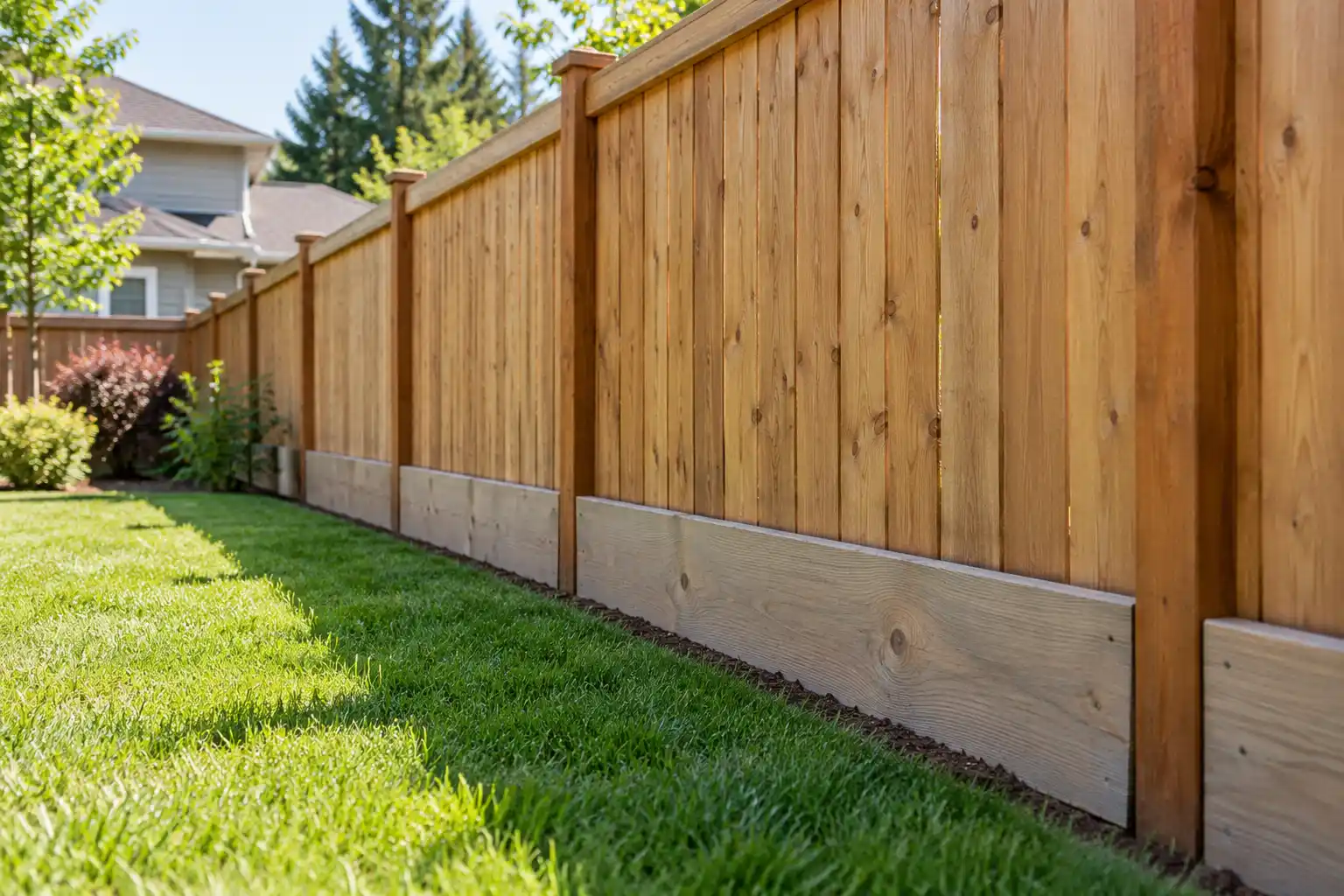 What a kickboard is and why cedar fences last longer with one
A fence kickboard is the sacrificial bottom board that keeps cedar pickets out of wet soil, and it is the cheapest way to add years to a Seattle fence.
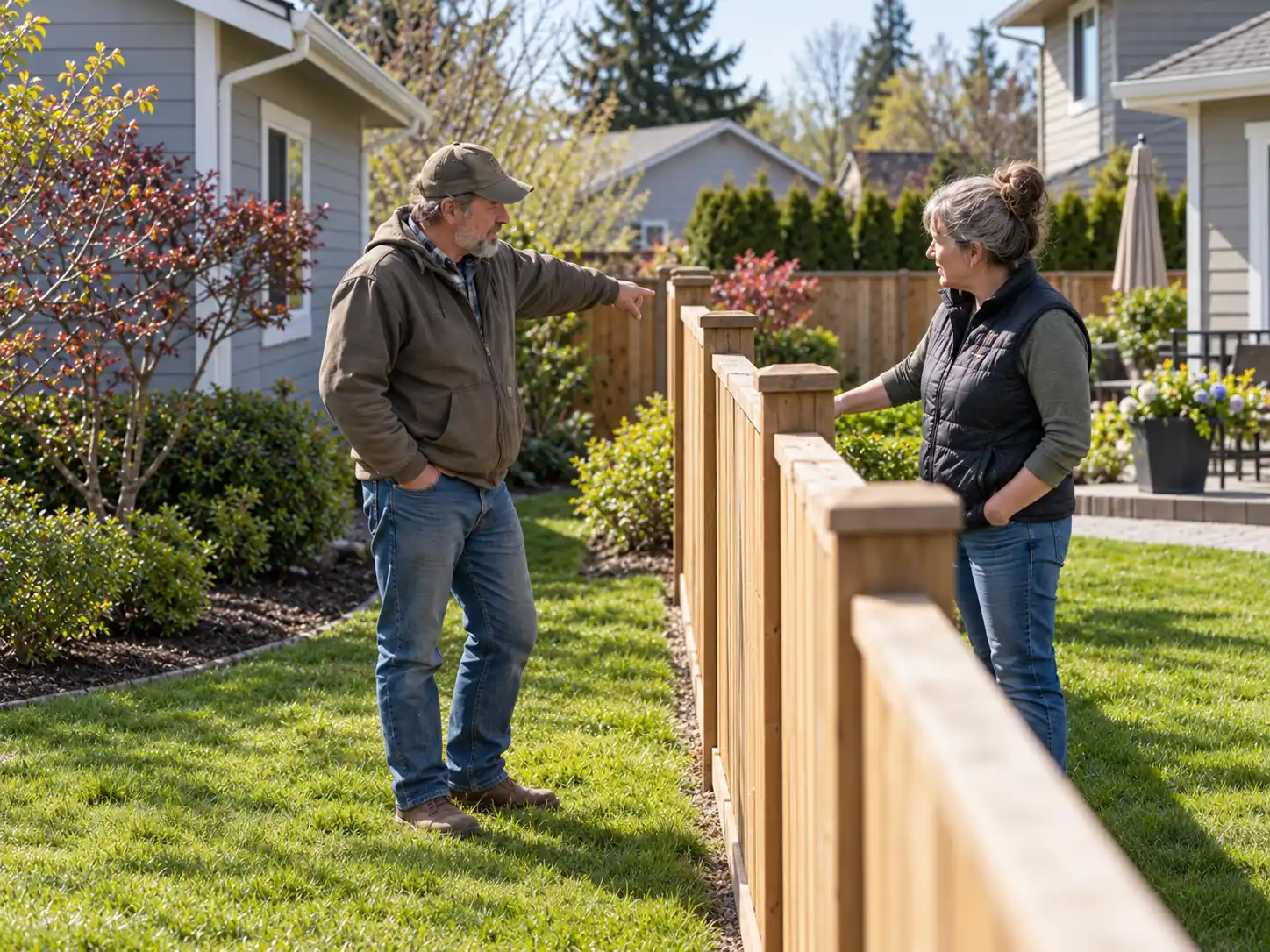 RCW 16.60.020 in plain English: splitting the cost of a boundary fence
RCW 16.60.020 in plain English: when a Washington neighbor must pay half the value of a boundary fence, when the statute is silent, and what to do first.
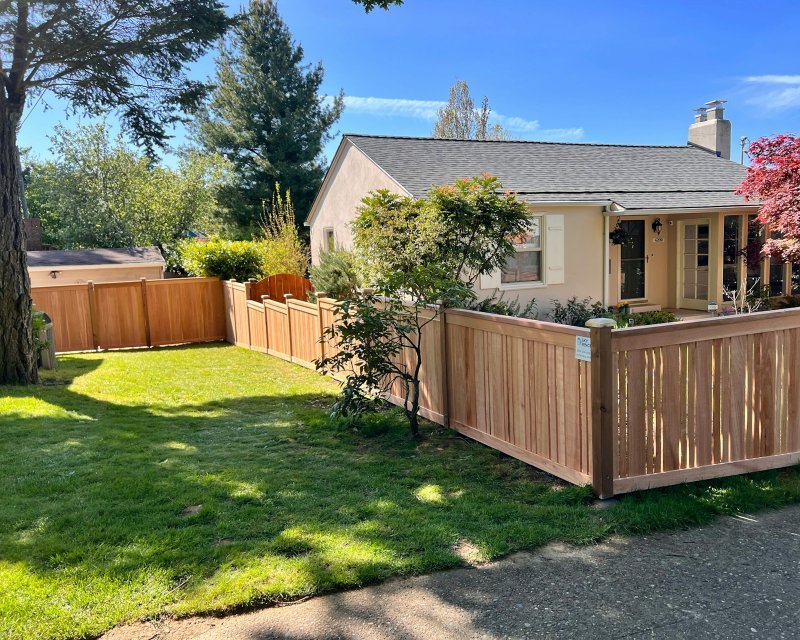 Planning
 a New Fence in Seattle: A Step-by-Step Guide
From measuring the line to the final walkthrough: rules, neighbors, utility locates, materials and budget, in the order that keeps a Seattle fence project simple.
Planning a fence?
Price it in a minute with the calculator, or send a few photos for a free written estimate.