
How to Check a Fence Contractor in Washington Before You Hire
Two minutes on the state’s lookup tool and a careful read of the estimate tell you most of what you need to know.

A fence is thousands of dollars of materials set in the ground for many years, built by a crew you will probably meet once. Before you sign, it is worth spending a few minutes checking who that crew works for. In Washington most of that check is free and takes less time than reading an estimate.
Start with the state’s contractor lookup
Anyone who builds or repairs fences for a customer in Washington must be registered with the Department of Labor & Industries (L&I). L&I’s Verify a Contractor tool lets you search by business name or registration number. Look for three things:
- An active registration under the same business name that is on the estimate.
- A bond and insurance on file, with dates that cover the time of your project.
- The history: L&I advises checking for previous lawsuits against the bond and license violations.
If the name on the estimate does not match what you find, ask why before going any further.
What registration requires
Registration is not a skills test, but it does come with a floor of financial protection. Under RCW 18.27.040, a registered contractor carries a bond of $30,000 for a general contractor or $15,000 for a specialty contractor (amounts in force since July 1, 2024). Under RCW 18.27.050 they must also carry general liability insurance of at least:
- $50,000 for damage to property,
- $100,000 for injury or death of one person,
- $200,000 for injury or death of more than one person.
These are minimums. For a larger job it is reasonable to ask for a current certificate of insurance naming the policy limits.
The registration number belongs on the advertising
RCW 18.27.100 requires a contractor’s current registration number on advertising that shows the contractor’s name or address, and on materials used to solicit work from homeowners. A website, flyer or estimate with no registration number on it is a reason to look harder.
The same law stops contractors from advertising that they are “bonded and insured” when the only bond and insurance they have are the ones registration already requires. The phrase on its own tells you nothing extra.
What the bond does, and what it does not
The bond can pay homeowners for a contractor’s breach of contract, including improper work. It is not a warranty you can call on with a phone call:
- To collect, a homeowner generally has to file a lawsuit against the contractor and the bond and win a judgment.
- The suit has to be filed within two years after the work was substantially completed or abandoned.
- The bond is shared among everyone with a claim against that contractor, and it is small next to the price of a long fence.
From July 1, 2026, Washington also runs a homeowner recovery program (RCW 18.27.410) that can pay up to $25,000 per contractor per parcel to eligible homeowners. Eligibility rules apply; read them on the state’s pages rather than relying on a summary.
The practical lesson: the bond is a last resort. The estimate, the contract and the contractor’s own warranty are what protect you day to day.
Read the estimate line by line
An estimate that shows only a total price cannot be compared with anything. A useful one lists:
- The length in feet and the height, section by section if they differ.
- The material and grade (for example, which cedar boards and what post size).
- How posts are set: depth, concrete, gravel, or steel posts.
- Each gate with its width and hardware.
- Removal and haul-away of the old fence.
- Who handles permits or HOA approval, and who calls 811 for utility locates.
- Cleanup, the payment schedule, and the warranty in writing.
To see what a fair range looks like before anyone visits, run your own numbers through the fence cost calculator.
Questions to ask at the site visit
- Where exactly is the property line? A contractor can build to survey markers but cannot decide where the line is. See boundary fences in Washington.
- How tall can the fence be here? Limits change with the city and with the part of the lot. See fence height rules by city.
- Who digs, and who requests the utility locate? Whoever digs is responsible for notifying 811 first. See call 811 before you dig.
- Who will be on site? Ask whether the crew are employees or subcontractors.
- How do you keep gates from sagging? The answer tells you a lot about how the rest of the fence will be built.
Red flags
- No registration number anywhere, or one that does not match the business name.
- Pressure to sign the same day, or a “price only good today”.
- A large up-front payment in cash before materials are ordered.
- An estimate with a single total and no breakdown.
- An offer to skip the permit or the utility locate to save time.
- A warranty that exists only as a verbal promise.
Checking a contractor this way takes less time than reading this article. Do it for every bid you collect, ours included. When you are ready, request a free estimate and compare it line by line.
Sources
- RCW 18.27.040: contractor bond
- RCW 18.27.050: insurance
- RCW 18.27.100: registration number in advertising
- RCW 18.27.410: homeowner recovery program
- L&I: Hiring a contractor
More From the Blog
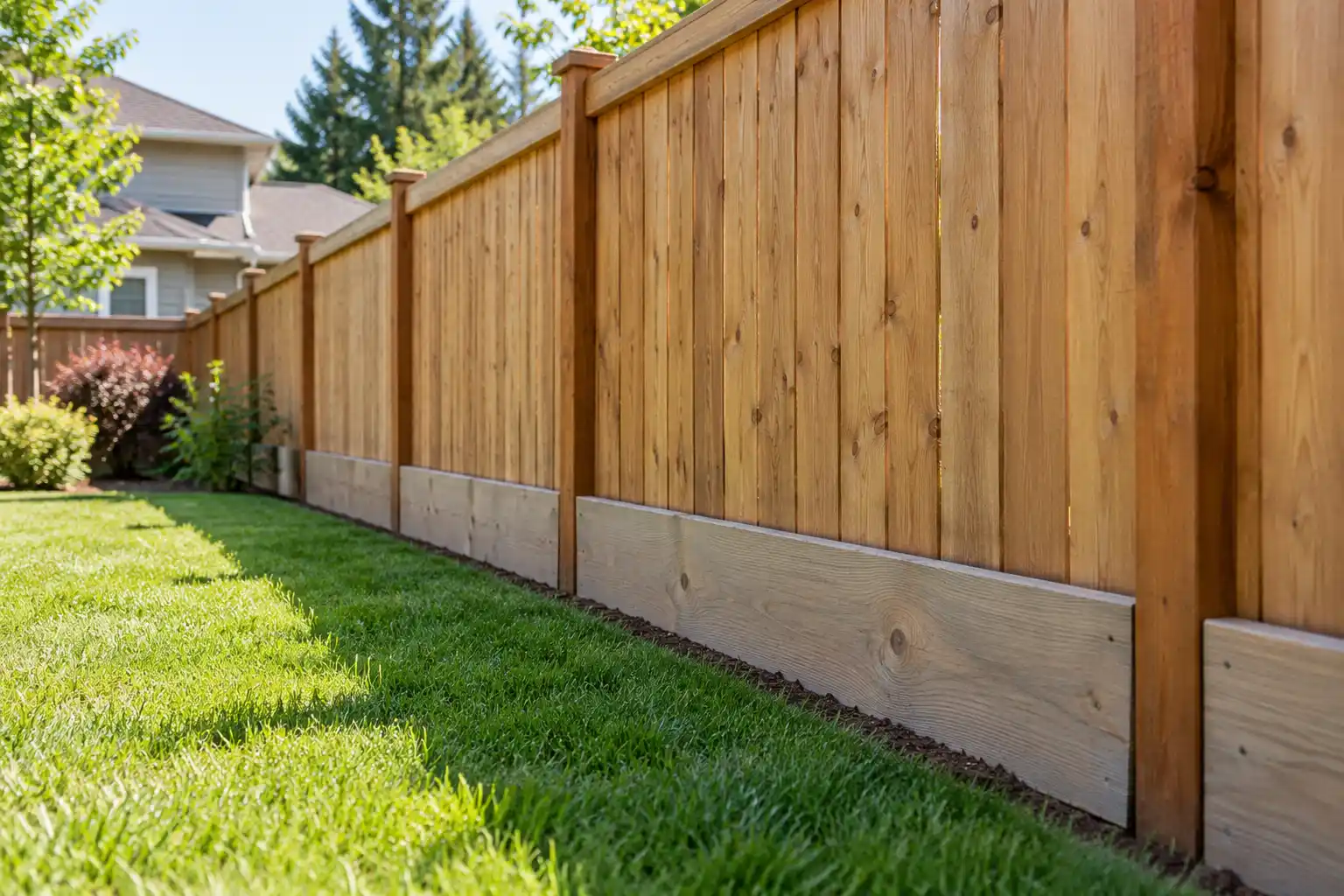 What a kickboard is and why cedar fences last longer with one
A fence kickboard is the sacrificial bottom board that keeps cedar pickets out of wet soil, and it is the cheapest way to add years to a Seattle fence.
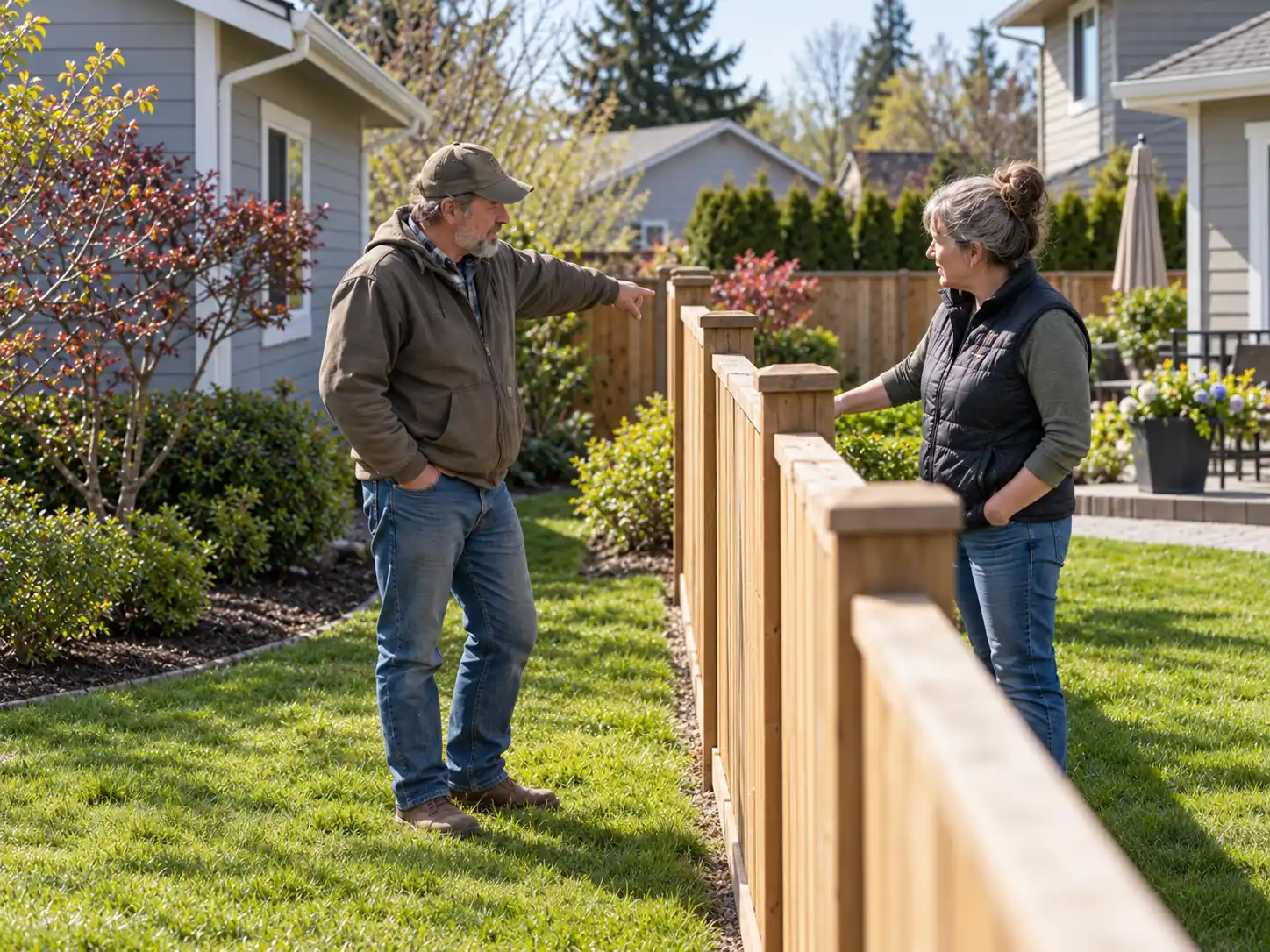 RCW 16.60.020 in plain English: splitting the cost of a boundary fence
RCW 16.60.020 in plain English: when a Washington neighbor must pay half the value of a boundary fence, when the statute is silent, and what to do first.
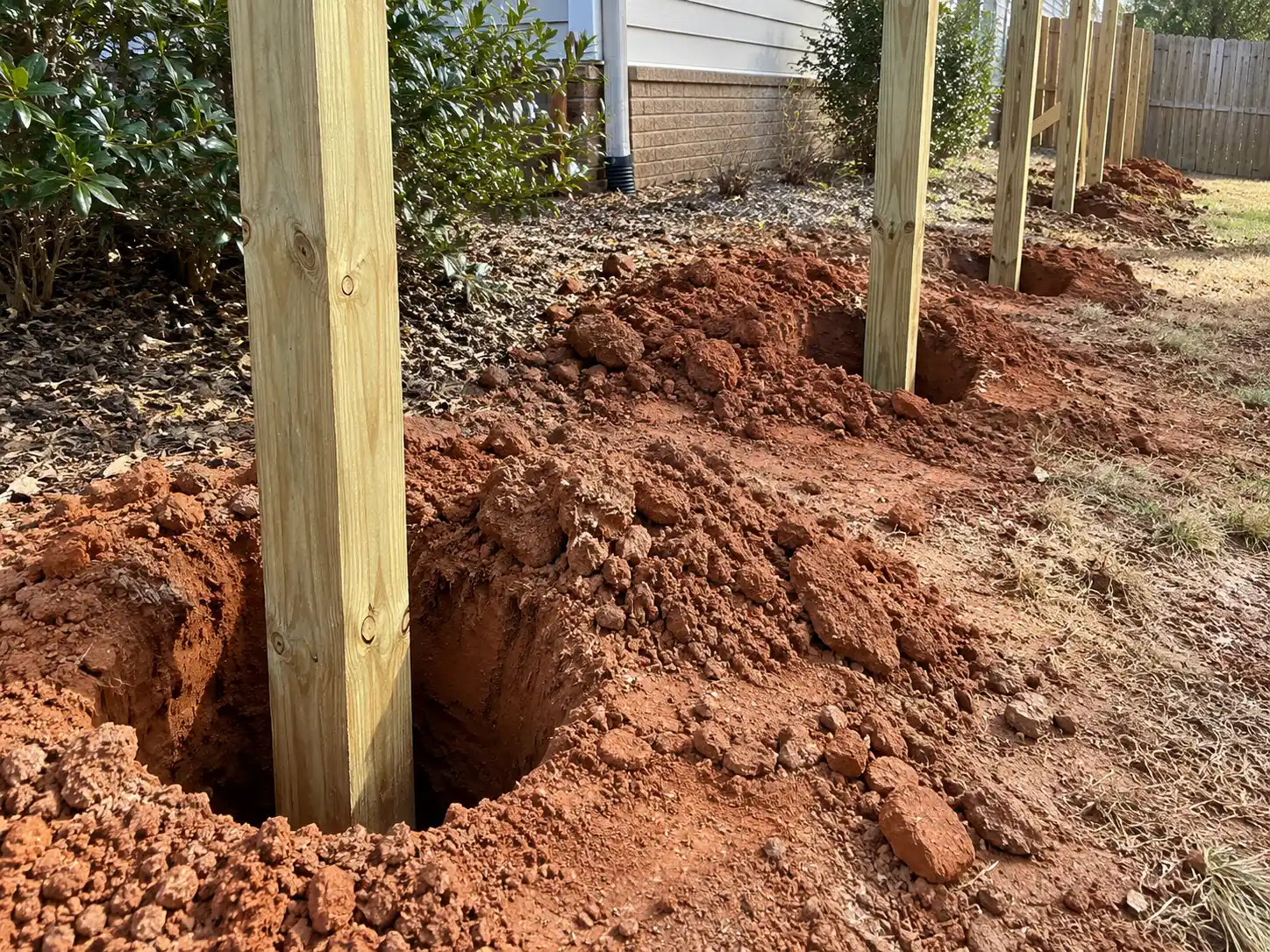 Concrete, gravel or steel: how we set fence posts in Puget Sound clay
How fence posts in clay soil survive Puget Sound wet stretches, and how we choose between concrete, gravel and steel footings for each fence line.
Planning a fence?
Price it in a minute with the calculator, or send a few photos for a free written estimate.